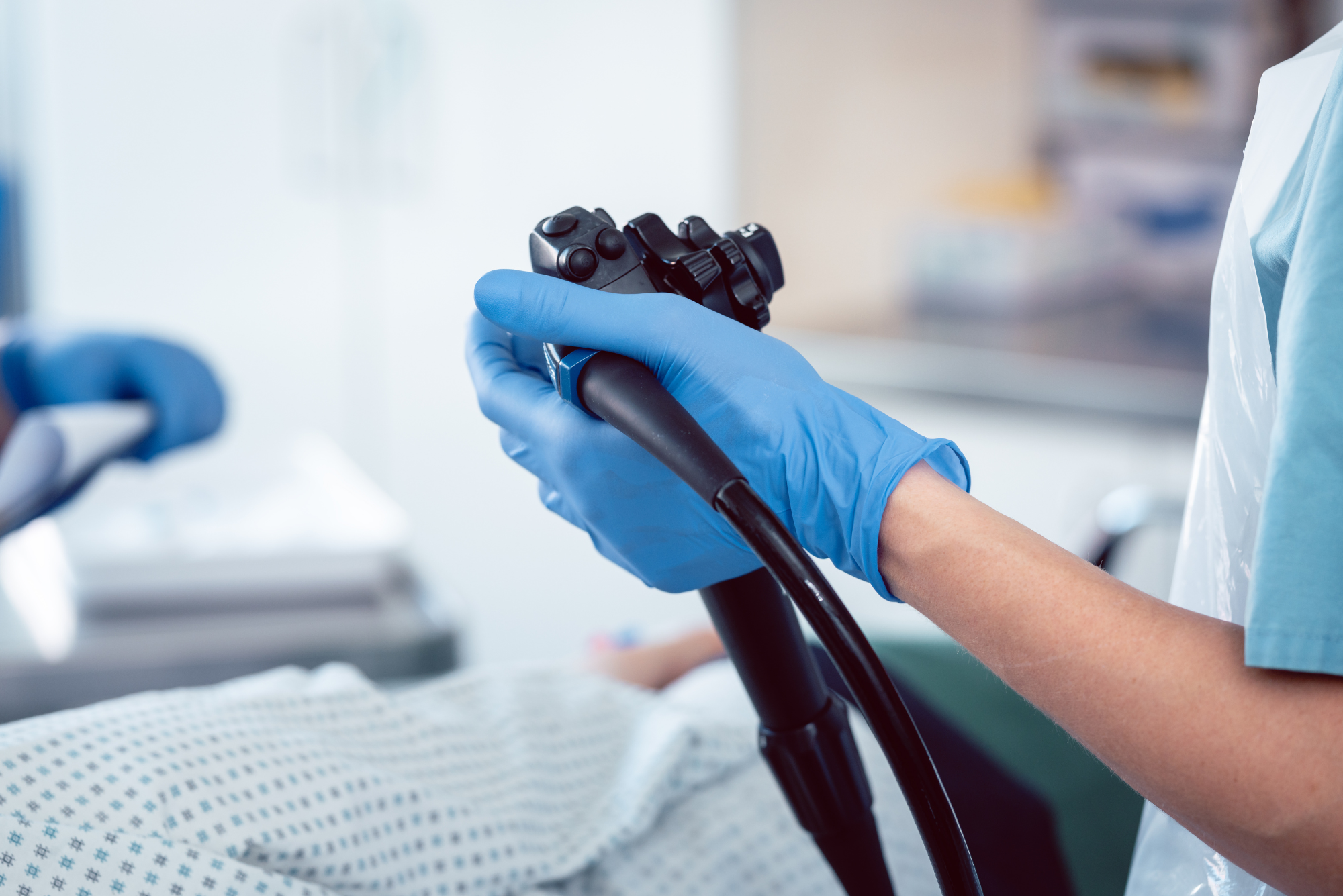
If you’re wondering what age you should get a colonoscopy, guidelines changed in 2021, lowering the recommended starting age from 50 to 45. A family history of colorectal cancer or advanced polyps can mean starting at 40 or even earlier, depending on the age of the family member at the time of diagnosis. Colonoscopy remains the gold standard for colorectal cancer screening because it can find and remove precancerous polyps in the same session, something stool-based and blood-based tests cannot do. With early-onset colorectal cancer rising in adults under 50, anyone experiencing rectal bleeding, unexplained anemia, or persistent bowel changes, even in their 30s or 40s, should talk to their doctor about screening sooner.
Colon cancer ranks among the top three cancer killers for both men and women. Yet it’s one of the few cancers we can often catch, and even prevent, with a single test: the colonoscopy.
But what age should you get a colonoscopy? Is it really necessary, or are the alternative tests sufficient? These are important questions in the face of rising cancer rates, so let’s get into the details.
What Age Should You Get a Colonoscopy?
The main question of this post is what age should you get a colonoscopy?
And the short answer is: 45 is the new 50.
When I was in medical school, the standard advice was to start colonoscopies at age 50. That changed in 2021, when national guidelines lowered the recommended starting age to 45 for average-risk adults. I wouldn’t be surprised if we see that number drop to 40 within our lifetime.
The reason is sobering. Colorectal cancer in adults under 50 climbed 63% between 1988 and 2015. It’s now the leading cause of cancer death in men under 50 and the second leading cause in women under 50.
The math behind the shift in guidelines is compelling. Reducing the screening by five years saves an additional 20 to 27 lives per 1,000 people screened, an encouraging outcome compared to the small risk of the procedure itself.
Who Should Get a Colonoscopy Before 45?
The new guidelines call for “average-risk” individuals to begin screening at age 45. But not everyone fits into the average-risk category.
DOWNLOAD OUR FREE EBOOK
Concierge Medicine is the future of healthcare.
Five honest questions to help you decide, plus a clear look at how membership medicine differs from the care you have now.
THE CONCIERGE MEDICINE GUIDE
Is Concierge Medicine Actually Right for You?
If you have a first-degree relative (a parent, sibling, or child) diagnosed with colorectal cancer or an advanced polyp before age 60, guidelines recommend earlier screening. The rule of thumb is to start 10 years before your family member received their diagnosis, or at age 40, whichever comes first.
Of course, this can be a little awkward since it requires asking about Mom’s colonoscopy, but it’s worthwhile. Knowing about a high-grade polyp in a family member could make the difference in stopping colon cancer in yourself before it starts.
A few other conditions push screening even younger. Inherited genetic syndromes like Lynch syndrome or familial adenomatous polyposis (FAP) often call for screening in your teens or 20s, guided by a genetic counselor. Inflammatory bowel disease (IBD), including Crohn’s disease and ulcerative colitis, typically triggers surveillance colonoscopies within a few years of diagnosis.
One in five patients with early-onset colorectal cancer carries a genetic mutation that raises their risk, and families may have no idea it runs in their bloodline. So if you’re not sure about your family history, ask.
Alternative Testing and Why Colonoscopy Remains the Gold Standard
Nobody gets excited about a colonoscopy. Nobody. As such, many people are inclined to put screening off as long as possible.
I understand the hesitation. But the reality is that a colonoscopy is a relatively minor outpatient procedure with a low risk of complications. It’s done under twilight sedation, you go home the same day, and you don’t remember any of it. The anticipation is almost always worse than the actual experience.
Patients dreading the prep or the procedure often ask about alternative screening options, such as stool-based Cologuard or the FIT test. These tools have a place, but colonoscopy remains the gold standard for one key reason: It’s the only test that both finds and removes precancerous polyps in the same session. It’s more than a screening tool; it’s a treatment. And once a polyp is removed, that threat is eliminated entirely.
Tests like Cologuard are decent at detecting cancer, but they can’t treat anything. They’re also less sensitive at catching advanced precancerous polyps, partly because no one is visually examining the colon. And a positive result still means you’ll need a colonoscopy to follow up.
The FIT test is better than nothing, but it (currently) performs even less reliably. It only detects blood in the stool, which may or may not be present with polyps or cancer.
If you’re truly unable to get a colonoscopy, a stool test like Cologuard is a reasonable stand-in. Just know it’s the next best option, not a true replacement for the real thing.
Why Early-Onset Colorectal Cancer Is Rising
We’ve had no shortage of news coverage of the rising number of colorectal diagnoses in younger adults. But some may wonder, are we just detecting more cases because of improved screening?
I asked my wife, a hematologist-oncologist, the same question. Improved screening may contribute, but it turns out the trend is quite real.
Incidence among adults aged 40 to 49 has jumped 15% over the past decade. By 2030, roughly 15% of all colorectal cancer diagnoses are expected to occur in younger adults.
No single cause explains this rise. Instead, several factors appear to be converging.
The modern Western diet plays a role, including its 50-year-long shift toward more red meat, processed meat, refined grains, and ultra-processed foods. One study found that women who drank two or more sugary beverages daily had more than double the risk of early-onset colorectal cancer versus women who had less than one per week. Each additional sugary drink during the teen years raised later-life risk by 32%.
Obesity plays a role, too, doubling the risk of early-onset colon cancer, and this risk starts young, in children and teens. Carrying extra weight is tied to the kind of metabolic dysfunction that covertly raises colon cancer risk long before age 45.
A sedentary lifestyle, particularly prolonged sitting, is consistently associated with higher rectal cancer risk. Emerging research also points to shifts in the gut microbiome, though this data is still developing. And, as mentioned, genetics matter, too, since roughly one in five early-onset cases carry a hereditary mutation.
A Story From Practice
I’ve seen the following scenario play out multiple times over recent years:
A patient in their mid-40s comes in for their first screening colonoscopy with no symptoms, no known family history, and feeling great.
During that routine screening, the gastroenterologist finds a large precancerous polyp with early high-grade changes. Left alone for 5 to 10 more years, that polyp had a real chance of becoming cancer.
Instead, it was removed in a 30-minute procedure. No chemotherapy, no surgery, no cancer diagnosis, just a follow-up colonoscopy down the road.
That same patient might have a younger sibling, say age 42, who now knows they need to get screened, too. And with that family history documented, insurance is required to cover the sibling’s earlier colonoscopy because it’s medically indicated.
This is why we encourage our members to stay current on screening. We want to find and eliminate the big things before they become big things.

Red Flag Symptoms You Should Never Ignore
Delayed diagnosis is one of the biggest problems in early-onset colorectal cancer. Younger patients, and sometimes their doctors, sometimes put too much stock in the person’s age and chalk symptoms up to hemorrhoids, stress, or diet changes.
But certain “red flag” symptoms deserve prompt evaluation regardless of your age.
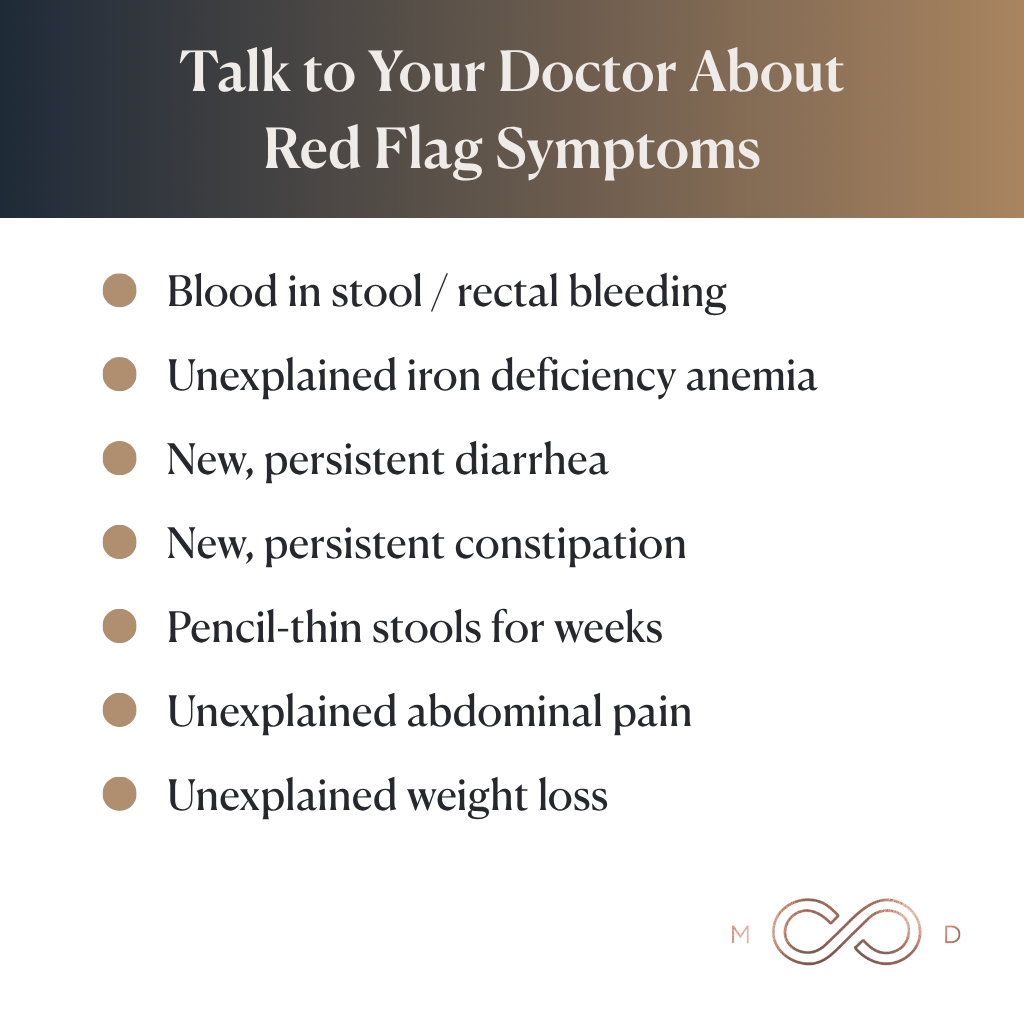
Blood in your stool or rectal bleeding should always be investigated, even if you think you know the cause. I’ve personally seen patients under 30 discover metastatic colon cancer after living with rectal bleeding for months because they thought it was from hemorrhoids.
Unexplained iron deficiency anemia is another major warning sign, especially if it doesn’t improve with supplementation. A persistent change in bowel habits, whether it’s new constipation, diarrhea, or narrow, pencil-thin stools lasting weeks, is worth investigating, as are unexplained abdominal pain and weight loss.
Other common mistakes, though not symptoms, I see that delay diagnosis include postponing a colonoscopy after a positive stool test, not knowing your family history, and waiting for symptoms to worsen before seeking care.
Lifestyle Habits That Lower Your Risk
Screening matters most, but lifestyle choices also meaningfully move the needle on colorectal cancer risk.
A colon cancer prevention diet leans heavily on fiber. Whole grains, fruits, vegetables, beans, and lentils are consistently linked to lower risk, along with higher calcium and dairy intake. Long-term high consumption of red and processed meat raises it. You don’t need to eliminate these foods entirely; just cutting back makes a difference.
Sugar-sweetened beverages deserve special attention given their striking link to early-onset colorectal cancer, especially when consumption starts in adolescence. Limiting ultra-processed foods and shifting toward a Mediterranean-style diet, rich in plant foods, fish, and olive oil, rounds out the picture. These are really the same core principles we recommend for supporting a long, healthy life in general, regardless of colon cancer risk.
Movement matters just as much as diet. Thirty minutes of daily activity lowers colon cancer risk, and a landmark 2025 study found that exercise after a colon cancer diagnosis cut recurrence by 28% and death by 37%. Having a healthy weight, not smoking, limiting alcohol, and maintaining adequate vitamin D levels round out the factors within your control.
What Age Should You Get a Colonoscopy? Final Thoughts
A colonoscopy is one of the most important cancer screenings a person can have. And with rising rates of colorectal cancer in younger adults, every person needs to know the new recommendations for what age they should get a colonoscopy.
It’s one of the most consequential health decisions you’ll make in your 40s, perhaps even your 30s, depending on your family history.
You may not be able to control your genetics, but you have enormous influence over your everyday choices and your screening timeline. Have the conversation with your doctor now, not later. The more proactive you are with the right tools at the right times, the more power you have to change your future.

Dr. William Pierce is a board-certified Family Medicine physician with experience in Emergency Medicine who joined Brentwood MD in 2025. He specializes in providing comprehensive, personalized care that combines preventive health strategies with acute medical expertise. Dr. Pierce is committed to building enduring patient relationships grounded in trust, clinical excellence, and collaborative health management.
Dive deeper into maximizing your lifespan and healthspan with Dr. Aaron Wenzel’s new book.