A normal blood pressure reading is under 120/80, with elevated blood pressure falling between 120–129/80, stage 1 hypertension at 130–139/80–89, and stage 2 hypertension beginning at 140/90. While guidelines like the AHA, JNC 8, and ISH differ on exactly where to draw treatment lines, all agree that any reading above 140/90 likely requires medication and that 130–139/80–89 warrants a conversation with a physician. Left unaddressed, chronically elevated blood pressure silently damages the heart, brain, kidneys, and arteries over time, raising the risk of heart failure, vascular dementia, kidney failure, and aortic aneurysm even without symptoms. However, lifestyle changes, including weight loss, sodium reduction, exercise, and other interventions, can lower blood pressure by 10 or more points and, in many cases, allow patients to reduce or eliminate medication.
With updated blood pressure guidelines published last year, many people have been asking some version of the same question: What counts as high blood pressure?
You’d think the answer would be straightforward, but as regular readers of this blog know, health is often more nuanced than simple yes/no, high/low dichotomies.
In this post, then, we’ll walk through the actual numbers, why the major guidelines don’t always agree with one another, and what your readings mean for your health over the coming decades. We’ll also talk about what to do with an elevated reading, should you get one, and your options for addressing genuinely high blood pressure.
What Counts as High Blood Pressure? The Numbers Explained
Let’s start with the basics. A normal blood pressure reads under 120 systolic (the top number) and under 80 diastolic (the bottom number). You’ll generally see this written as 120/80, or lower.
All the major organizations agree on this as the ideal blood pressure.
From there, the American Heart Association (AHA) and the American College of Cardiology (ACC) say a reading of 120–129/80 counts as elevated, and 130–139/80–89 is stage 1 hypertension. Stage 2 hypertension begins at 140/90.
If this were just about terminology, the post could end here. But it’s about far more than what doctors label different blood pressure readings on your chart.
The updates to the AHA/ACC guidelines are based on findings from the long-running CARDIA study, which indicated that the earlier hypertension shows up in a person’s life, the more cumulative damage it does to their body over time.
For instance, people in the study who developed hypertension before age 35 had 2.3 times the risk of an enlarged heart muscle (or left ventricular hypertrophy) and 2.9 times the risk of coronary artery calcification by midlife, compared to those with normal blood pressure at a young age. Even after adjusting for blood pressure later in life, that early exposure mattered more.
The takeaway from the CARDIA study was to implement guidelines that better catch and treat elevated blood pressure in a person’s 30s or 40s, preventing that cumulative damage from occurring.
Why Don’t the Guidelines Agree?
Ask three different groups what counts as high blood pressure, and you’ll get three different answers. The American Heart Association, Joint National Committee, and International Society for Hypertension all agree that under 120/80 is optimal, but they diverge sharply on how aggressively to label and treat the numbers above that.
The American Heart Association calls 130/80 stage 1 hypertension. The JNC and ISH call that same range “high normal” and don’t apply the “stage 1” label until 140/90. The disagreement mostly comes down to philosophy. The latter two guidelines favor a more conservative, lifestyle-first approach, while the American Heart Association now favors earlier pharmacologic intervention.
Despite the differing labels, however, all camps agree that a reading over 140/90 counts as high blood pressure and, in most cases, should be addressed with medication. They also agree that a systolic reading between 130 and 139, regardless of what you call it, deserves attention and a conversation with your physician.
So, don’t let the label give you an excuse. If your reading falls into a gray zone below 140/90, that’s not a reason to tell yourself, “Technically, that’s still normal by some standards.” If your blood pressure has risen, time under that pressure matters. Don’t ignore it. In fact, I encourage you to shoot for optimal, not for the lowest bar that lets you stop thinking about it.
The good news is that optimal is achievable, and for many, that doesn’t have to mean a lifelong prescription. I’ve had patients walk in on three blood pressure medications and walk out nine months later on none, purely through sustained lifestyle change.
How You Check Your Blood Pressure Matters
A single blood pressure reading in a clinic isn’t the full picture. I want to know what your blood pressure looks like at home, day after day.
That means using an arm cuff (not a wrist cuff), resting quietly for a few minutes beforehand, sitting with your feet flat on the floor rather than crossed, and resting the arm with the cuff at heart level. If a clinic reading looks a little elevated, I’d rather gather two weeks of home data and look at the trend than react to a single number that could be high due to traffic, nerves, or stress.
Silent Damage: What Elevated Blood Pressure Does Over Time
High blood pressure has really earned its nickname “the silent killer.” You can carry elevated numbers for decades without a single symptom, all while damage accumulates in four major organ systems.
Your heart works like any other muscle under elevated pressure: It thickens. Eventually, this thickening causes it to lose some of its ability to relax and fill properly between beats. That progression raises your risk of heart failure and heart attack.
Your brain takes a hit, too. Chronic hypertension accelerates plaque formation, damages small blood vessels in the brain, and disrupts normal blood flow around neurons. The consequences reach well beyond stroke; hypertension is a leading contributor to vascular dementia and raises Alzheimer’s risk as well.
Your kidneys are especially vulnerable here. After diabetes, high blood pressure is the next leading cause of dialysis-dependent kidney failure. Elevated blood pressure stiffens kidney arteries, reduces blood flow, and damages filtration, rendering the kidneys unable to do their crucial work.
Your arteries stiffen under sustained pressure, which further amplifies your systolic blood pressure, creating a detrimental cycle of increasing pressure and stiffness. Downstream, that stiffening contributes to peripheral artery disease and, in serious cases, aortic aneurysm or dissection, both life-threatening.
The Framingham Heart Study found that every blood pressure category above normal incrementally raises cardiovascular risk compared to having no elevation at all. It isn’t an all-or-nothing switch; risk accumulates with every point above optimal.
How We Approach an Elevated Reading at Brentwood MD
In a lot of primary care settings, an elevated blood pressure reading gets a quick mention: “Change your diet; we’ll check again next year.” Or, perhaps, “Let’s get you on a medication and check in next year.” In our practice, we have a deeper conversation.
Now, if a new member walks in with a blood pressure over 160/90, I already know they need medication right away. But that’s not the end of the conversation. We also look at lifestyle changes and modifications that could bring the need for medication down.
That’s for fairly uncontrolled hypertension. But if a member lands in that stage 1 or early stage 2 gray zone, I want home trend data first. Two weeks of properly measured readings will give us a better foundation before we make any decisions together.
Lifestyle change is genuinely powerful here, and three levers make the most impact.
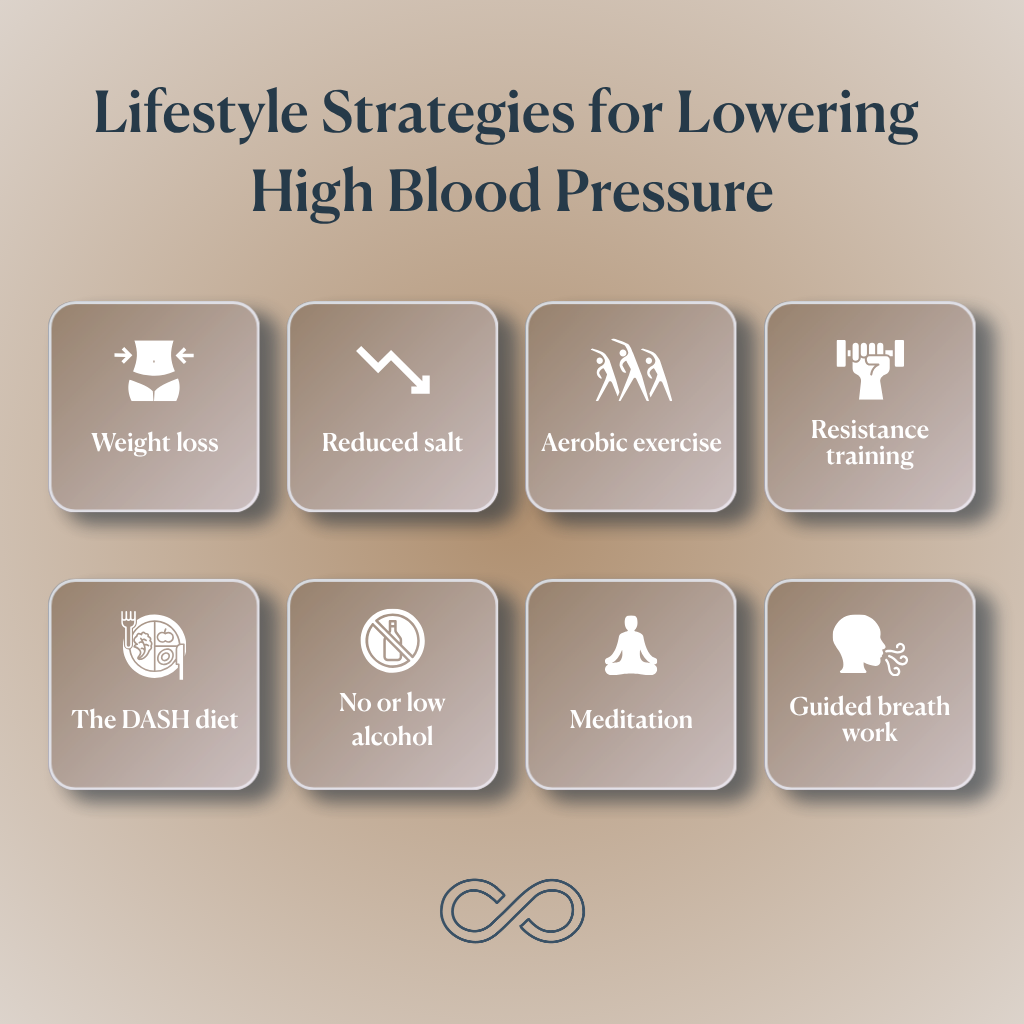
- Weight: Losing just 5% of body weight, or roughly 3 points off your BMI, can lower systolic pressure by 6 to 8 points.
- Salt: Cutting sodium to 1,500 milligrams a day (with 2,300 mg as an upper ceiling) can reduce it another 6 to 8 points.
- Exercise: Getting 150 minutes of aerobic exercise weekly can take off 4 to 8 more points.
Combine all three levers, and you might see a 10 to 12 point drop, often enough to move you out of the danger zone entirely.
A few other strategies deserve mention. The DASH diet, built around fruits, vegetables, whole grains, and low-fat dairy, has good evidence for lowering blood pressure by 5 to 8 points on its own. Resistance training has increasingly strong evidence behind it for lowering blood pressure as well, and pairs well with aerobic work.
Alcohol matters as well. Abstinence is optimal, but staying under two drinks a day for men and one for women still helps.
In another genuinely interesting update, the American Heart Association recently added meditation and breathing control to its blood pressure management recommendations. Twenty minutes of meditation twice daily can lower blood pressure by 5 to 7 points, and 15 minutes of guided breath work can add another 5 points.
When Does Medication Actually Make Sense?
Stage 2 hypertension generally gets medication alongside lifestyle changes from day one. The risk at that level is high enough that waiting doesn’t typically make sense.
Stage 1 is more nuanced. If you don’t have other risk factors, such as diabetes, kidney disease, or a strong family history, I typically recommend attacking lifestyle changes hard for three to six months first. If the numbers don’t improve, that’s when we’ll discuss starting a low-dose medication, layered on top of the lifestyle work you’re already doing rather than instead of it.
Remember, the goal with medication is to save your organs and blood vessels from extended time under pressure so you can live a healthier, more fulfilling back half of life in the future. That doesn’t mean you’re married to medication forever. It just means you’re putting out a fire right now while you work to address the source over time.
What Counts as High Blood Pressure: Final Thoughts
There’s a lot of inertia when it comes to health. For many people, symptoms are what get us out of our comfort zone and into the doctor’s office. But hypertension stays asymptomatic until organ damage is well underway. That’s “the silent killer” at work.
Picture someone in their 30s or 40s who gets consistent readings at home of 140 over low 80s, but they feel completely fine. Technically, by American Heart Association standards, that reading already meets criteria for stage 2 hypertension, immediate medication, and lifestyle intervention.
Is this person going to bring up hypertension with their doctor? Or are they going to “wait and see,” hoping the number won’t go up any further?
I hope they’ll make an appointment. And, in my experience, it helps if they know they can make a difference without marrying a medication that’ll be with them to the grave.
If you take one thing from this post, let it be this: What counts as high blood pressure matters less than what counts as optimal. Aim for under 120/80, take the gray zone seriously the moment you see it, and treat trend data at home as more valuable than any single number in a clinic.
The earlier you act, the more you keep your long-term health within your control.

Dr. William Pierce is a board-certified Family Medicine physician with experience in Emergency Medicine who joined Brentwood MD in 2025. He specializes in providing comprehensive, personalized care that combines preventive health strategies with acute medical expertise. Dr. Pierce is committed to building enduring patient relationships grounded in trust, clinical excellence, and collaborative health management.