Download file | Play in new window | |
Most of us would rather not think about cancer. We’d prefer to scroll past the videos, skip the podcasts, and maybe set this blog post aside right now.
Conversations about cancer are legitimately challenging. But they’re also some of the most important conversations we can have, because knowledge is what turns fear into forward motion. My hope is that what follows will help you feel empowered, whether cancer becomes your story someday or the story of someone you love.
Meet Oncologist Dr. Natalie Spradlin
For this important discussion, I asked my friend and colleague Dr. Natalie Spradlin to share from her expertise and experience.
First, her credentials: Dr. Spradlin is an assistant professor of hematology and oncology at Vanderbilt-Ingram Cancer Center. A Nashville native and Vanderbilt School of Medicine graduate, she brings over 14 years of clinical experience to her patients, along with three board certifications in internal medicine, hematology, and oncology. She is co-director of Vanderbilt’s Internal Medicine Miller Society and an award-winning educator of medical students, residents, and fellows.
But, as a medical student and young resident, Dr. Spradlin didn’t even plan on becoming an oncologist. Her grandmother had developed breast cancer at a young age, causing her to steer clear of the field throughout her training. Then a single rotation changed everything.
“I had avoided cancer my whole residency, so I decided I would do an outpatient rotation on oncology,” she says. “I was caught within two weeks.”
She felt it was an honor and a privilege to come alongside someone with a cancer diagnosis, develop a plan, and walk with them through it.
That mindset shapes how Dr. Spradlin works with patients today. “My goal is when they leave, that they can speak about what’s going on with them,” she says. “There’s a lot of information behind the decisions and the conclusions that anybody’s capable of being able to understand and move forward.”
What to Do Before You See the Oncologist: Protecting Your Mental Energy
In primary care, I’m often the one who delivers the news that a test result looks abnormal: a mass, a suspicious lab, an imaging finding. At that point, we don’t have a diagnosis. We’re in a gray zone, waiting for the appointment with the oncologist.
In that gap, there’s a lot of space for anxiety to take hold.
Dr. Spradlin has seen how people fill that space, and she has some clear, practical suggestions for navigating it:
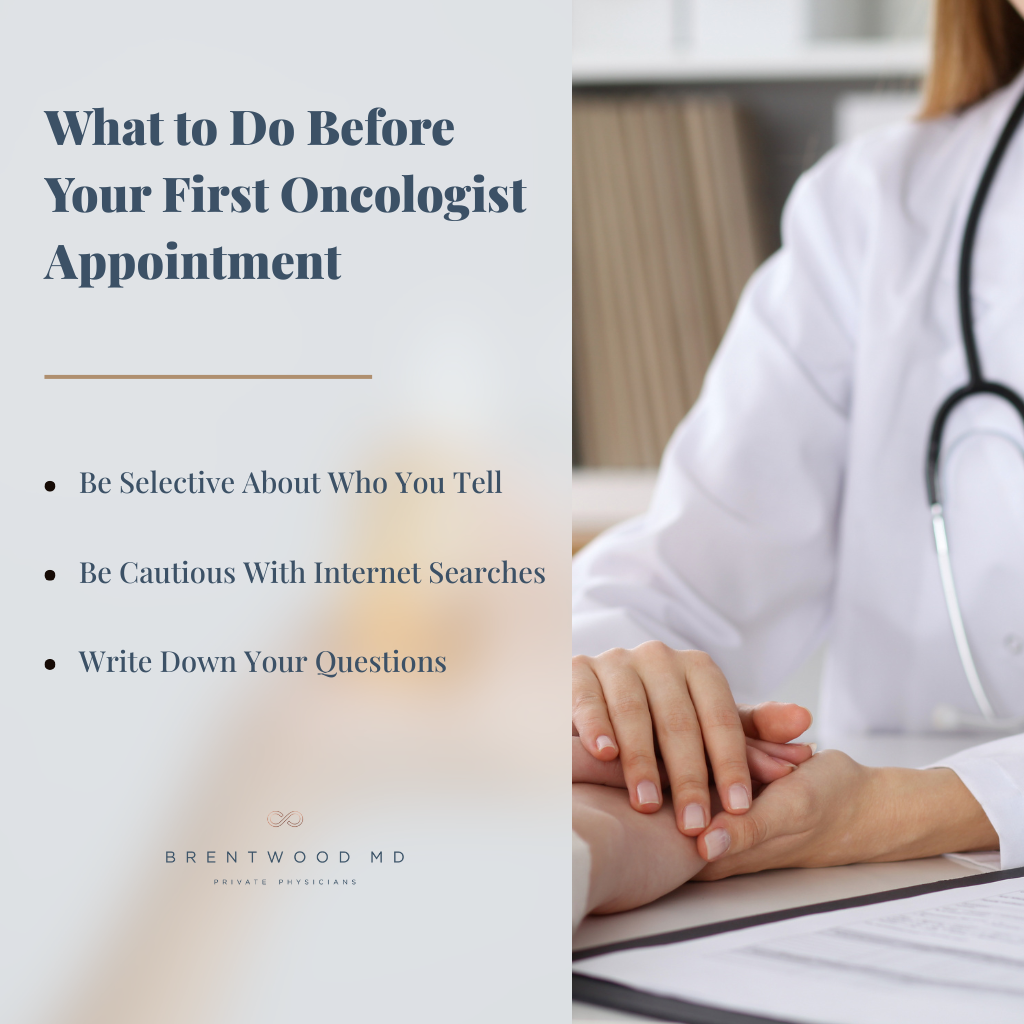
Be Selective About Who You Tell
When you get uncertain news, the instinct is often to reach out to family, friends, neighbors, or maybe even social media. The problem is that well-meaning people will come back with opinions, miracles, and horror stories, all of which add noise to an already stressful situation.
“You will get 30 opinions on what you need to do next,” Dr. Spradlin says. “It can become overwhelming and create a lot of uncertainty.” Her suggestion is to be thoughtful about who hears the news before all the facts are in. Protecting your mental space in those early days matters.
Be Cautious With Internet Searches
The urge to search for more information immediately is understandable. You want answers, and the internet feels like the fastest way to get them. But Dr. Spradlin cautions against going down that path too early.
“Cancer is not all the same, and so the treatment plan depends on what exact type it is, what stage it is, the health of the person,” she says. “What you read and assign to yourself before you ever get into the office may not even apply to you.”
With cancer, the specifics matter enormously. And since you don’t know the specifics of your situation at this point, you can’t effectively find helpful information (yet).
Write Down Your Questions
Rather than pouring your precious mental energy into internet rabbit holes, Dr. Spradlin suggests channeling that drive for information into writing down all the questions you need your doctor to answer. For example:
- If you’re awaiting a diagnosis, what are the two or three things the doctor thinks this could be?
- If you already know it’s cancer, where exactly is it?
- What does the prognosis look like?
- What are the treatment options?
Don’t be shy about getting out your list and asking those questions during your appointment. “It’s important to leave knowing the facts,” Dr. Spradlin says. And it’s easy to forget a question or two in the moment if they aren’t written down.
Remember, from “Will my hair fall out” to “What stage do I have,” there are no wrong questions, none too big or too small.
Don’t Let Too Much Time Pass
Dr. Spradlin’s practice works to see new oncology patients within 10 business days of their referral. That can feel like a long time when you’re waiting, and it sometimes is. But she encourages patients to advocate for themselves if the timeline feels inappropriate.
“It’s okay to advocate for yourself and do a follow-up phone call to either the doctor referring you or to the center and say, ‘I was found to have such and such, but I was given a visit such and such. Is this appropriate?’” The specialist seeing you for the first time won’t necessarily know how long you’ve been waiting, which means your voice matters in making sure nothing is falling through the cracks.
Gather Your Personal Information
One of the most useful things you can bring to that first appointment with your oncologist is a clear picture of your family’s cancer history. Who had what? How old were they? This information helps the oncologist assess whether a genetic pattern may be at play.
“If there’s a strong family history of, let’s say, breast or colorectal cancer on the maternal side, listing off all the relatives that have had it just builds the case that we may have a genetic syndrome here,” Dr. Spradlin explains.
Syndromes like BRCA1 and BRCA2, for example, are inherited gene mutations that significantly raise the risk of certain cancers. Knowing that context changes the clinical picture considerably.
Additionally, you might opt to bring copies of important test results with you to your appointment, especially if you’ve had imaging done. Ideally, all your results should be shared with the oncologist before your appointment. But it can be helpful for you to have, for example, your MRI scan on a disc to show your doctor, just in case.
Second Opinions: Thoughts From an Oncologist
After a cancer diagnosis has been made and a treatment plan has been discussed, it’s natural to wonder if it’s reasonable to get a second opinion. The short answer from Dr. Spradlin is yes, second opinions are perfectly reasonable. And you shouldn’t feel the least bit awkward about it.
“It’s never wrong to get a second opinion,” she says. “If the doctor you see first is offended by that, that’s on that doctor.”
She adds that patients shouldn’t feel the need to hide it. Sometimes patients don’t tell their oncologist they’re pursuing another opinion, which creates delays and confusion on the care team’s end. Dr. Spradlin wants patients to know they can be straightforward, let the office know they’re getting a second look, and that they’ll be back in touch.
If a doctor causes trouble because they don’t want you getting a second opinion, that may tell you something important about whether you want to continue seeing that doctor.
That said, Dr. Spradlin does caution against collecting third, fourth, and fifth opinions. Every additional consultation means more time before treatment can begin, and the timeline matters. “If you do that multiple times, two weeks becomes six weeks,” she says. One expert second opinion, in addition to whoever you saw first, is very reasonable. Multiple opinions can meaningfully delay your care.
She also has specific advice about where to get that second opinion. Don’t just visit another general oncologist at a nearby practice. Level it up.
“Go get a content expert, whether it’s a short plane ride away or a more academic type team,” she says. You can look for a large-volume cancer center, ideally one that does active research in your specific cancer type. The National Comprehensive Cancer Network (NCCN) certifies major cancer institutions across the country, and finding a center with genuine expertise in what you have can be well worth the travel.
“Your success rates will be measurably higher if the surgeon or team that’s managing your rare disease has done it several times before, or lots of times, depending on the incidence rates,” she says.
Dr. Spradlin also notes that cancer care includes a lot of nuance and that two teams may not take the exact same approach. Yet neither is necessarily wrong. So, how do you evaluate the information you get from different providers?
She suggests listening for common truths across both visits. Do both oncologists agree on the diagnosis? On the stage? On the general sequence of treatments? The points of overlap are your foundation. The areas where opinions differ tend to be the finer points of the art of medicine, places where reasonable clinicians can differ and where further discussion may prove valuable.
Taking Action: What You Can Do Right Now
One of the most consistent things Dr. Spradlin sees after a patient’s first oncology visit is the desire to do something. People want to take control. They want to help themselves. That instinct is healthy, and there are several areas where action can genuinely make a difference:
Eat a balanced diet. Certain myths are circulating online that sugar specifically “feeds” cancer and should be eliminated entirely. Dr. Spradlin gently corrects this. “Cancer is a parasite,” she explains. “It eats whatever you’re eating.”
That said, excess sugar isn’t good for anyone. A well-rounded diet matters, not because of some special anti-cancer property, but because it’s better for your body. Her recommendations include lean meats, fish, chicken, vegetables, fruit, and fiber. Keep red meat to once or twice a week at most and, yes, limit your sugar intake.
Reduce alcohol. If you drink regularly, pulling back is a smart move, particularly during treatments. “Your liver is busy. Your liver is processing other things,” Dr. Spradlin says. “Let’s just let it focus on one thing, and not alcohol.” There’s no medicinal benefit to alcohol in the context of cancer treatment, and the liver needs every advantage it can get.
Stop smoking. For patients who smoke, stopping is one of the most impactful changes they can make. It eliminates ongoing exposure to toxins and carcinogens, and it significantly improves candidacy for surgery. For lung tumors requiring resection, smoking cessation is actually a prerequisite.
Exercise regularly. People who exercise consistently tend to tolerate treatment better and recover more fully afterward. But Dr. Spradlin isn’t talking about training for a marathon (unless that’s already part of your routine). “Regular aerobic exercise, walking, swimming, jogging, some resistance training. Those things are good,” she says. “And they also give you natural endorphins, so you have a lift in your mood.” That last part isn’t unimportant in the context of a cancer diagnosis.
Final Thoughts on Navigating a Cancer Diagnosis
A cancer scare or a cancer diagnosis has a way of stopping life in its tracks. The uncertainty is real, and the fear is real. But what Dr. Spradlin brings to every conversation is something equally real: a clear plan, grounded expertise, and a genuine belief that every patient is capable of understanding what’s happening and moving forward with it.
At Brentwood MD, we walk with our members through exactly these kinds of moments. Whether it’s delivering difficult news, navigating a referral, or helping you prepare for an appointment with a specialist, we’re here to make sure nothing gets lost in translation.
The healthier you are going into any treatment, the better equipped you’ll be to withstand it, respond to it, and come out on the other side. That’s something we can always be working toward, starting today.
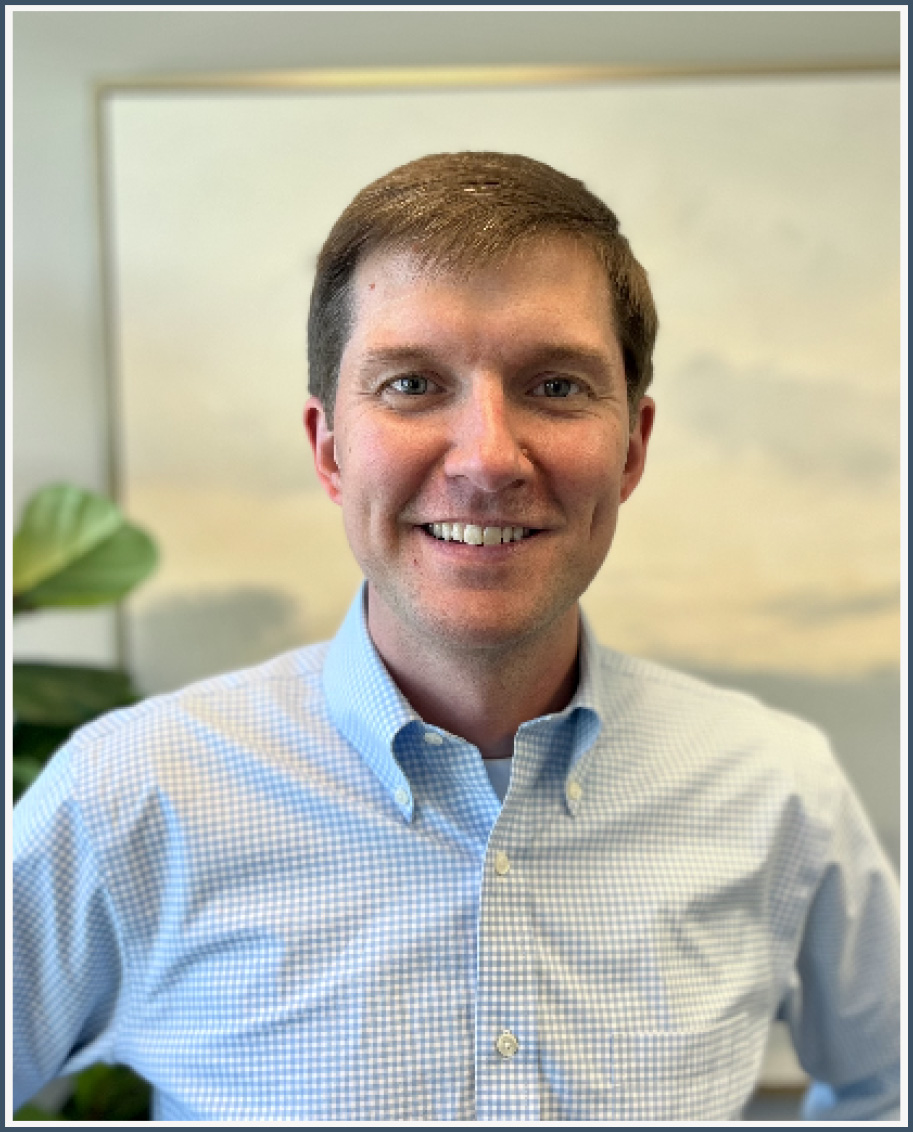
Dr. Wright joined Brentwood MD in 2022 as the model allows him to spend more time connecting with patients and build a foundation of exceptional care. He is a Nashville native and completed his family medicine residency at the University of Tennessee Health Science Center, where he also served as Chief Resident. He believes that your health deserves a prominent position on your priority list, and would be honored to serve you and your family.