Your 30s are a busy decade. Careers are demanding, families are growing, and life is full.
Most people in their 30s feel relatively fine, making it easy to put health on the back burner until their 40s, 50s, maybe even their 60s. But that could be one of the most costly health mistakes a person makes.
The habits you set in your 30s are quietly writing your health story for the decades ahead. It’s a time in which you’re kicking off either compound growth or compound neglect.
The health red flags I’m talking about in this post aren’t dramatic warning signs you’d rush to the ER for. They’re subtle shifts, easy to brush off, but enormously meaningful. And when you catch them early, the solutions are usually simple.
I like a golf metaphor here: In your 30s, you’re still on the front nine, with lots of time to make adjustments and significantly alter the score. By the back nine, though, you have less opportunity to change the outcome.
So, let’s talk about health red flags in your 30s, why they’re so important, and what you can do to make a difference for your future.
Health Red Flags in Your 30s: What to Watch For
Before getting into specifics, a clarification: I’m not talking about acute health issues needing quick attention, though some people certainly develop those in their 30s.
What I’m describing as “red flags” are the subtle, slow shifts your body uses to signal the beginning of a danger that won’t fully show up for years. It’s easy to ignore a slightly elevated blood pressure or a slowly expanding waistline, even if it increases each year. You’re still young. You’ll get around to it when you’re older. It’s no big deal. Right?
The fact is, the body starts to whisper in your 30s before it screams in your 50s.
When you have the knowledge you need to hear those whispers earlier, you can often make a simple change today that circumvents something complicated later.
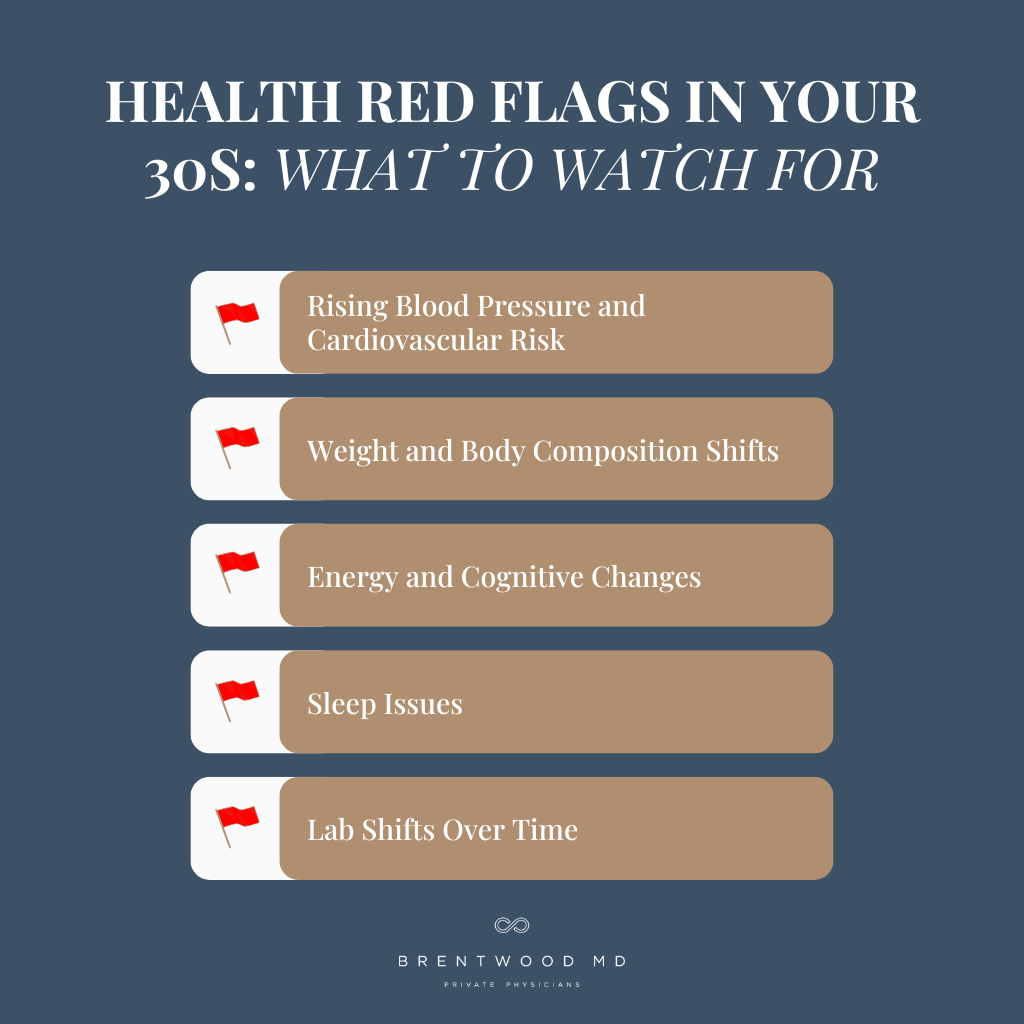
These are the red flags I aim to help my members recognize:
Rising Blood Pressure and Cardiovascular Risk
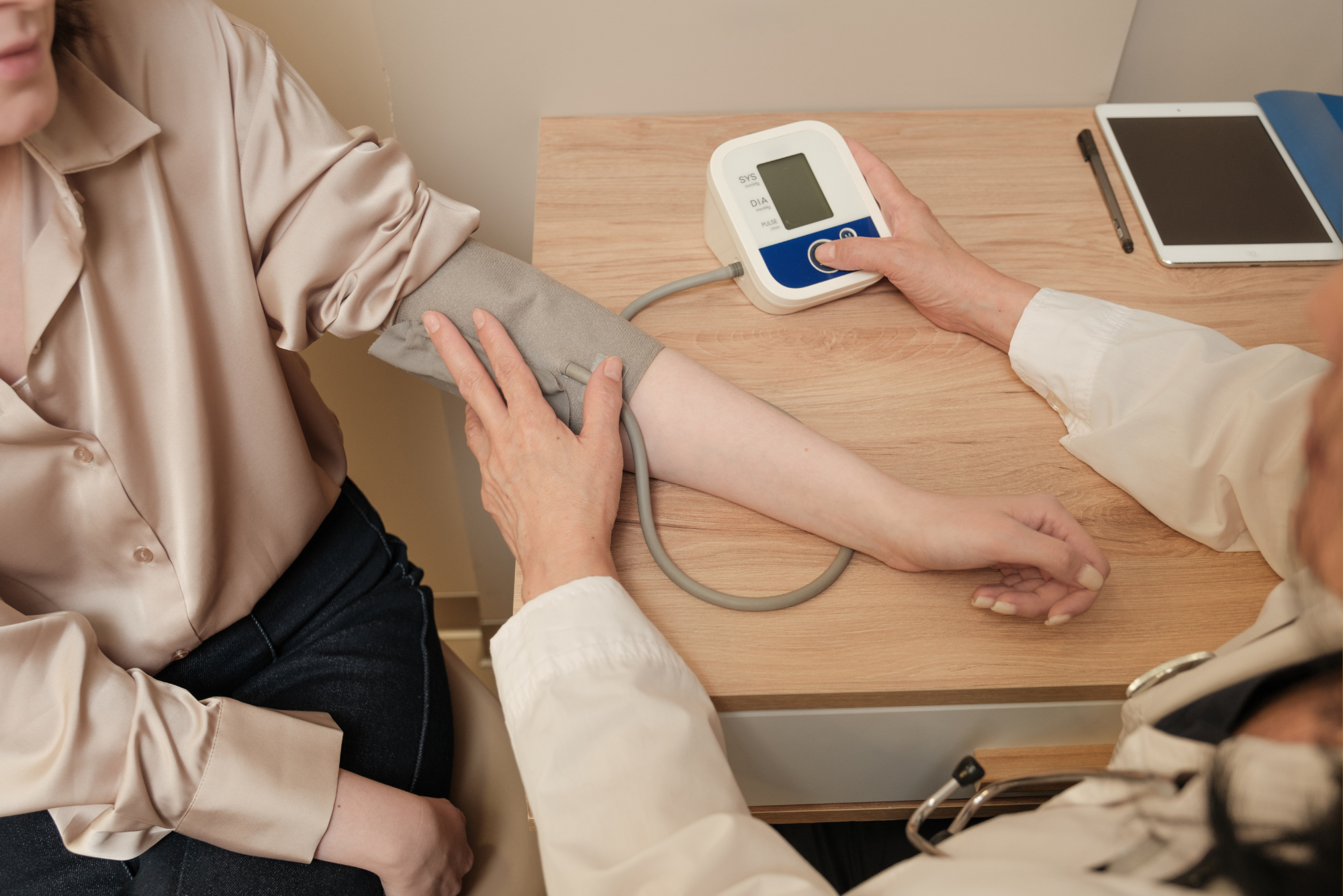
Blood pressure creeping up is one of the most important and overlooked health red flags in your 30s. Repeated elevated readings in early adulthood are linked to cardiovascular disease and worse brain structure later in life. But it causes no symptoms whatsoever, so most people don’t address it at this point.
In the conventional medical system, hitting 140/82 in your 30s might earn you a “watch your diet and come back in a year.” In proactive care, that becomes a deeper conversation evaluating sleep, sodium, stress, conditioning, and alcohol. Can we make some lifestyle adjustments to bring your blood pressure down? Would starting one thoughtfully chosen medication now prevent the need for five in the future?
For patients with a family history of cardiovascular risk, I look further: LDL, apolipoprotein B (actual particle number), lipoprotein A (a genetic cholesterol marker), and in some cases, a Cleerly study. I’ve had members in their 30s already showing plaque formation. Getting ahead of that early can mean the difference between a healthy midlife and a major cardiac event.
Weight and Body Composition Shifts
It’s no secret that weight tends to creep up as we age and that this increase contributes to many of the chronic diseases that impair both quality and length of life. But, while weight is important, body composition is even more so.
What if your pants size climbs from a 34 to a 36 to a 38, but your weight doesn’t change? This doesn’t mean you’re in the clear. In fact, you’re likely losing lean muscle and gaining visceral fat, the dangerous kind of fat that accumulates around organs, while raising your risk for diabetes and cardiovascular disease.
BMI alone doesn’t catch this. That’s why body composition analysis is one of the tools we use at Brentwood MD to track not just total body fat, but how it’s distributed and how it trends.
Energy and Cognitive Changes
Afternoon crashes and brain fog are so common in your 30s that many people chalk them up to work stress, “mom brain,” or general busyness. And maybe sometimes that’s true. But early insulin resistance is another frequent culprit.
In a conventional workup, if your A1C and fasting glucose are within range, doctors will often say you’re good. But that isn’t the whole story.
A1C and fasting glucose are lagging indicators of health. They don’t reveal a problem exists until you’re in the middle of it. That’s why here at Brentwood we also look at fasting insulin, which I consider the metabolic holy grail.
Optimal fasting insulin sits around five. If yours is 30, that’s six times optimal, and you’re already on the spectrum of insulin resistance. But it’s potentially still five to 10 years before you’d meet the criteria for prediabetes.
Catching it early can mean you never get there at all.
Sleep Issues
Short, fragmented, or poor-quality sleep matter, regardless of the cause. Yes, you’ll go through stages that necessarily involve less sleep, like caring for a newborn or having a particularly demanding month at work. But prolonged sleep deprivation is associated with many health issues, including elevated cardiovascular and metabolic risk, even in midlife.
Sleep apnea is even more serious. If you experience snoring, waking unrefreshed, morning headaches, and/or daytime fatigue, you might need to be evaluated. Sleep apnea dramatically affects cardiovascular and metabolic health if left untreated. Once identified, however, it’s relatively straightforward to address.
Lab Shifts Over Time
Some of the most telling health red flags in your 30s show up in lab work, but in conventional care they’re often dismissed as simply “in range” or “borderline.” Being “in range” on a lab report and having an “optimal” result that creates positive momentum for your future are not the same thing.
Findings like rising triglycerides, low HDL, mildly elevated liver enzymes, and glucose trending upward are frequently waved off, especially when looked at in isolation rather than over time. But tracked across five or 15 years, they predict serious health issues like diabetes, fatty liver disease, and cardiovascular disease.
Besides considering the standard metabolic panel in detail, I also find it valuable to look at less obvious factors like thyroid function, iron stores, and B12 levels. Subclinical hypothyroidism and low B12 or iron can show up as fatigue, cognitive dulling, mood changes, and weight shifts that are easy to chalk up to a busy life. Correcting them often improves quality of life substantially and makes it much easier to follow through on healthy habits.
Hormone levels also belong here. As we age, our hormones change either as a normal part of getting older or due to illness, environment, or lifestyle factors.
Testosterone in men, for example, starts declining in their 20s, and by their 30s, as many as 20% of men may experience symptoms of low T. In appropriate patients, we can support the body’s own testosterone production with lifestyle strategies or with enclomiphene; we can also discuss testosterone replacement therapy.
Addressing hormonal shortages, for both men and women, can support mood, drive, lean muscle mass, and overall health in this critical decade.
What You Can Do About Health Red Flags in Your 30s
Knowing the red flags is half the battle. The other half is acting on them.
Start Regular Resistance Training
Muscle loss starts earlier than most people think, and it becomes harder to reverse as you age. But in your 30s, you’re in a prime window for building and preserving lean mass.
Muscle is protective against metabolic disease, cardiovascular risk, and the frailty that steals so much quality of life later on. I like to encourage members to aim for at least two days of structured resistance training per week, plus consistent daily movement.
Train Good Dietary Habits
The dietary habits you develop and employ in your 30s set the stage for your health and eating patterns for the rest of your life.
If you haven’t already, learning how to choose high-quality ingredients and cook them at home is a high-leverage move that simultaneously helps you reduce ultra-processed food intake. Anchor those meals around lean protein, healthy fats, and vegetables, and you have a recipe for muscle preservation, metabolic health, and longevity.
Protect Your Sleep
Good sleep isn’t a luxury; it’s a pillar of health.
First, if you have any reason to suspect sleep apnea, get an evaluation as soon as you can. Sleep apnea is a serious sleep assassin, and its negative health effects compound over time.
Second, work to build in habits that protect your sleep window. Maybe that’s putting a hard stop to emails after 7 p.m. Or eating dinner an hour earlier. Or modifying your evening alcohol intake.
Regardless of what works best for you, the downstream benefits of optimal sleep for cardiovascular health, metabolic function, and cognitive performance are substantial.
Know Your Body Composition
A standard scale doesn’t tell you everything. Body composition analysis shows muscle mass, fat distribution, visceral fat levels, and how those numbers change over time. These are far more meaningful than weight alone, and they allow you to track progress more clearly.
Quality home body composition scales can help, as can in-office tracking.
Try a Continuous Glucose Monitor
For anyone who’s showing early signs of insulin resistance, or who’s just metabolically curious, a continuous glucose monitor (CGM) is a powerful tool. I’ve had members discover that something they considered healthy, like a smoothie bowl, was significantly spiking their blood sugar and sabotaging their weight loss or health optimization efforts.
A CGM shows how your body responds to your food in real time. The benefit of that personalized data is hard to replicate any other way.
Leverage Wearables
Wearable technology can be genuinely useful, with some caveats.
If you’re a person who tends to perseverate over health data points, wearables may not be for you. The goal isn’t to stress yourself out or compare personal stats with friends. Heart rate variability, for example, is genetically distinct in every person. Yours will be completely different from your coworker’s.
However, tracking your own trends over time can be extremely valuable.
One rough night of sleep isn’t a red flag. Several months of poor sleep is. Wearables can help you identify trends like this, plus what factors might be contributing. Did you have alcohol late on the nights with poor sleep? Were you on screens? How was your stress?
I personally appreciate my wearable for Zone 2 cardio workouts. It helps me keep tabs on my heart rate so I know I’m training in the right zone.
Why Personalized Care Matters for Health Red Flags in Your 30s
Right now, more health information is available than ever through social media, podcasts, books, biohacking content. It’s everywhere. And I’m genuinely glad that people are interested in their health and are educating themselves.
But here’s the thing: You can’t podcast your way to ideal health.
Information needs context. And in the realm of health, that context is you. What works for someone else’s body, labs, and lifestyle may not work for yours.
A physician who tracks your trends over time, considers your symptoms alongside your data, and knows your story, values, and goals makes an enormous difference in helping you choose effective and long-term health strategies.
That’s why I chose to work in the concierge model. I want the time and freedom to be an advocate in each member’s corner, building practical, personalized plans that fit real people’s lives.
Health red flags in your 30s are quiet nudges that deserve your attention now. Addressing them with the right habits and support will help your back nine be just as fulfilling as your front.

Dr. William Pierce is a board-certified Family Medicine physician with experience in Emergency Medicine who joined Brentwood MD in 2025. He specializes in providing comprehensive, personalized care that combines preventive health strategies with acute medical expertise. Dr. Pierce is committed to building enduring patient relationships grounded in trust, clinical excellence, and collaborative health management.