
Even if you’re feeling great on testosterone replacement therapy, you might still be worrying about this mysterious but potentially alarming elevation of hematocrit.
What is hematocrit? And why is your doctor so worried about it? What causes high hematocrit? Do you need to stop your hormone therapy?
High hematocrit is one of the most common side effects of testosterone replacement therapy (TRT), but there’s some confusion about what it actually means for your health. To get clarity, let’s talk about what causes high hematocrit, why it matters, and how proper management makes a difference.
What Is Hematocrit?
To understand what causes high hematocrit and why it matters, you first need to understand what hematocrit is.
Hematocrit isn’t a substance in your blood, but a measurement of your blood. In lab results, hematocrit simply shows what percentage of your blood is made up of red blood cells.
You can think of hematocrit as your blood’s “thickness.” A higher hematocrit percentage means more red blood cells packed into each drop.
Normal hematocrit for men typically falls between 38–50%. With TRT, however, levels commonly rise above this range, sometimes reaching 54% or higher.
Elevated hematocrit in isolation isn’t necessarily dangerous, so it’s not a reason to immediately discount TRT. But it does require consideration, monitoring, and sometimes management with a knowledgeable physician.
What Causes High Hematocrit in Men on TRT?
So why does TRT cause high hematocrit?
DOWNLOAD OUR FREE EBOOK
Concierge Medicine is the future of healthcare.
Five honest questions to help you decide, plus a clear look at how membership medicine differs from the care you have now.
THE CONCIERGE MEDICINE GUIDE
Is Concierge Medicine Actually Right for You?
In general, testosterone stimulates the bone marrow to produce red blood cells, a process called erythropoiesis, which increases the percentage of red blood cells in your total blood volume. On TRT, the increased testosterone in the body typically increases erythropoiesis within the first few months and can continue for up to a year.
The magnitude of hematocrit increase depends on multiple factors, including the formulation and dosage of the testosterone you take. So if you end up with too much elevation from one type, you might be able to try another.
Typical increases for different formulations of testosterone include:
- Injectable Testosterone: ~4% increase
- Testosterone Gel: ~3% increase
- Testosterone Patches: ~1–2% increase
Older age, higher dosages, long-acting injections, sleep apnea, and smoking all increase the likelihood of significant hematocrit elevation.
The Conventional View: Does High Hematocrit Cause Blood Clots?
The standard medical concern regarding TRT and high hematocrit centers on blood viscosity. More red blood cells mean thicker blood that flows less easily through your vessels.
High hematocrit may cause hypertension, but what most doctors fear is the increased risk of cardiovascular events like stroke and heart attack, presumably from blood clots.
Current guidelines typically recommend holding or reducing TRT if hematocrit reaches or exceeds 54%. Many doctors suggest therapeutic phlebotomy (blood draws) to reduce clotting risk.
The logic seems straightforward: thicker blood → harder to flow → more likely to clot → higher heart attack and stroke risk. But this oversimplifies the actual mechanism of cardiovascular danger.
The Real Risk: A System Under Pressure
While research does show an increased risk of cardiovascular events associated with high hematocrit, that doesn’t mean clotting is the source. In fact, high hematocrit doesn’t even directly cause blood clots.
So why the elevated risk? In clinical practice, I’ve observed that high hematocrit contributes to elevated blood pressure in some men, a condition which definitively contributes to heart attack and stroke risk.
The medical establishment has warranted concern about high hematocrit, but for the wrong reasons. They’re not incorrect that elevated hematocrit requires attention; they’re just focused on the wrong mechanism.
What This Means for Management
If you’re on TRT and your hematocrit rises but your blood pressure remains well-controlled, there’s less cause for alarm than guidelines might suggest.
However, if elevated hematocrit coincides with rising blood pressure, it makes sense to consider lowering your TRT dose to normalize both values. This is particularly important for men who are already hypertensive before starting therapy.
By understanding the actual physiology of hematocrit and TRT, you can avoid panic at every heightened reading while working with your doctor to manage true risk factors intelligently.
When High Hematocrit Is Beneficial
Not all hematocrit elevation is problematic. Men who are anemic before starting therapy often see their anemia corrected by TRT. This improves their blood’s oxygen-carrying capacity and leads to better energy and cognitive function, contributing to an overall improvement in health.
Apart from anemia, long-term data even suggests that moderate hematocrit increases up to about 52% are associated with lower mortality, supporting the 54% safety threshold. This may stem from better oxygen delivery resulting in better cellular function, more energy, and improved metabolic health, significant benefits as long as blood pressure remains controlled.
How to Manage High Hematocrit on TRT
If you’re starting or currently on TRT, proper management requires regular monitoring and intelligent intervention when necessary.
Monitoring Schedule
Guidelines recommend checking hematocrit before starting TRT, then ongoing at three months, six months, 12 months, and then annually if stable. You’ll want to check more frequently if values are borderline or after dose adjustments.
Management Options
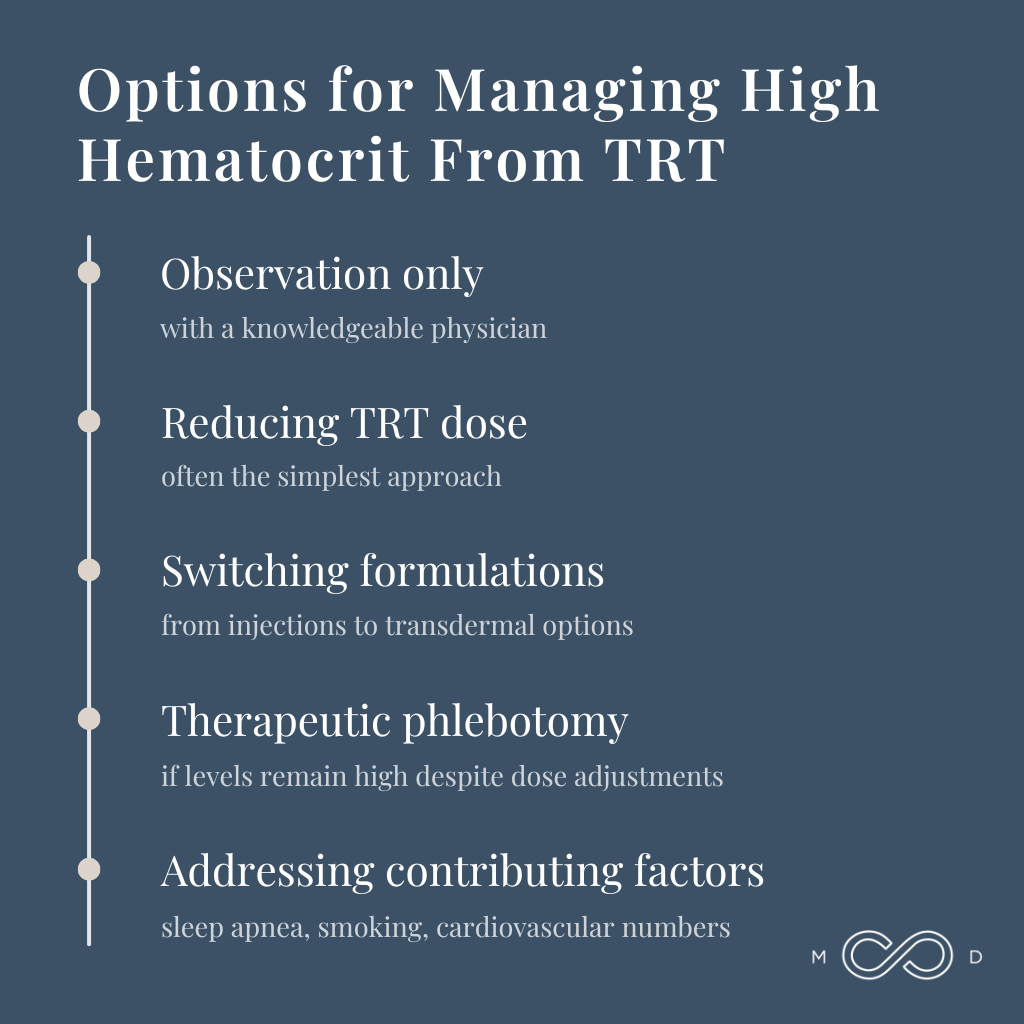
If your hematocrit is elevated but below 54%, close monitoring with your physician may be all you need. But if you and your physician determine you need to reduce your hematocrit, especially if you’ve reached the 54% intervention threshold, options for management include:
- Reducing TRT dose, often the simplest approach
- Switching formulations, from injections to transdermal options
- Therapeutic phlebotomy, if levels remain high despite dose adjustments
- Addressing contributing factors, sleep apnea, smoking, cardiovascular numbers
Working with a physician who understands TRT and has the bandwidth and desire to provide personalized care makes an enormous difference here. TRT isn’t a one-size-fits-all treatment, and good management requires time and attention to detail.
What Causes High Hematocrit: The Bottom Line
So, what causes high hematocrit? TRT certainly can, but it isn’t always a cause for concern.
The conventional worry about clotting risk misses the actual mechanism at play. Elevated hematocrit can contribute to higher blood pressure in some men, and that’s where the primary cardiovascular risk comes from. Monitoring blood pressure alongside hematocrit provides a much clearer picture of your actual risk profile.
If TRT could improve your quality of life, then don’t let fear-based anxieties keep you from speaking to an expert on the subject. Of course, it’s important to work with an experienced physician who understands the nuances of hematocrit and TRT, monitors proactively, and adjusts your protocol appropriately when needed.
At the end of the day, understanding what causes high hematocrit with TRT will allow you to make informed decisions about your treatment rather than reactive ones based on incomplete information.

Dr. Aaron Wenzel is a concierge physician specializing in the care of fast-moving entrepreneurs, executives, and public figures in the Nashville, TN area. Dr. Wenzel’s diverse life experience and extensive training in family medicine, emergency care, nutrition, and hormone replacement therapies give him the unique platform to provide unmatched care for his patients.

Dive deeper into maximizing your lifespan and healthspan with Dr. Aaron Wenzel’s new book.