
We recently had a stretch of winter storms roll through Tennessee, leaving many of us cooped up inside for days on end. Temperatures dropped, sunlight disappeared, and even some of my most energetic friends and patients described feeling sluggish, low, and unlike themselves.
For some people, that feeling passes quickly. For others, a noticeable dip in mood, energy, and motivation every fall and winter follows a predictable pattern, and that pattern has a name: seasonal affective disorder, or SAD.
If you consistently feel like a genuinely different person in November than you do in May, you might be suffering from this (very treatable) disease.
What Is Seasonal Affective Disorder?
First, let me clear up a common misconception: This isn’t just “in your head.” Seasonal affective disorder is a well-studied, biologically driven mood disorder. Think of it as depression with a seasonal trigger, where depressive episodes reliably occur at the same time of year, classically fall and winter, and lift when the season changes, typically in spring.
Like many medical conditions, seasonal affective disorder exists on a spectrum. Some people experience only a handful of mild symptoms; others struggle with a dramatic shift in how they function during the winter months.
Symptoms of Seasonal Affective Disorder
According to the Diagnostic and Statistical Manual of Mental Disorders, Fifth Edition (the DSM-5), a diagnosis of seasonal affective disorder requires at least five of the following nine symptoms to be present for more days than not over a two-week period:
- Depressed mood
- Anhedonia, or a reduced ability to feel pleasure in activities you once enjoyed
- Sleep changes, such as excessive sleep or feeling unrefreshed even after adequate sleep
- Appetite changes, especially increased cravings for carbohydrates and sweets
- Fatigue or low energy despite sufficient sleep
- Brain fog, poor concentration, or difficulty making decisions
- Feelings of worthlessness or guilt
- Psychomotor changes, such as slowing down (taking longer to shower, dress, or complete simple tasks; walking slowly; reduced eye contact or body language) or speeding up (pacing, uncontrollable talking, intense inner tension)
- Thoughts of self-harm or suicide
That last symptom is what I call a red flag symptom. If you’re experiencing thoughts of harming yourself, feeling that loved ones would be better off without you, or struggling to care for yourself or your children, please reach out immediately to a trusted physician, mental health professional, crisis line, or emergency services. This isn’t something to wait on; get the help you need and deserve right away.
Getting to a Seasonal Affective Disorder Diagnosis
Five of the above nine symptoms, present most days for two weeks, are consistent with a depressive episode. For a diagnosis of seasonal affective disorder specifically, a clear relationship between symptom onset and a particular season must also be established, along with a reliable return to baseline when that season ends. According to psychiatric guidelines, a SAD diagnosis requires this same-season, same-symptoms pattern for at least two consecutive years, with genuine remission in between.
As an example of what this might look like, I imagine a patient who, every November, starts sleeping through her alarm, craving bread and sugar, skipping the gym, and feeling more irritable and tearful. By April, she’s back to exercising, eating well, and feeling like herself. Same story, every year. That’s the seasonal pattern.
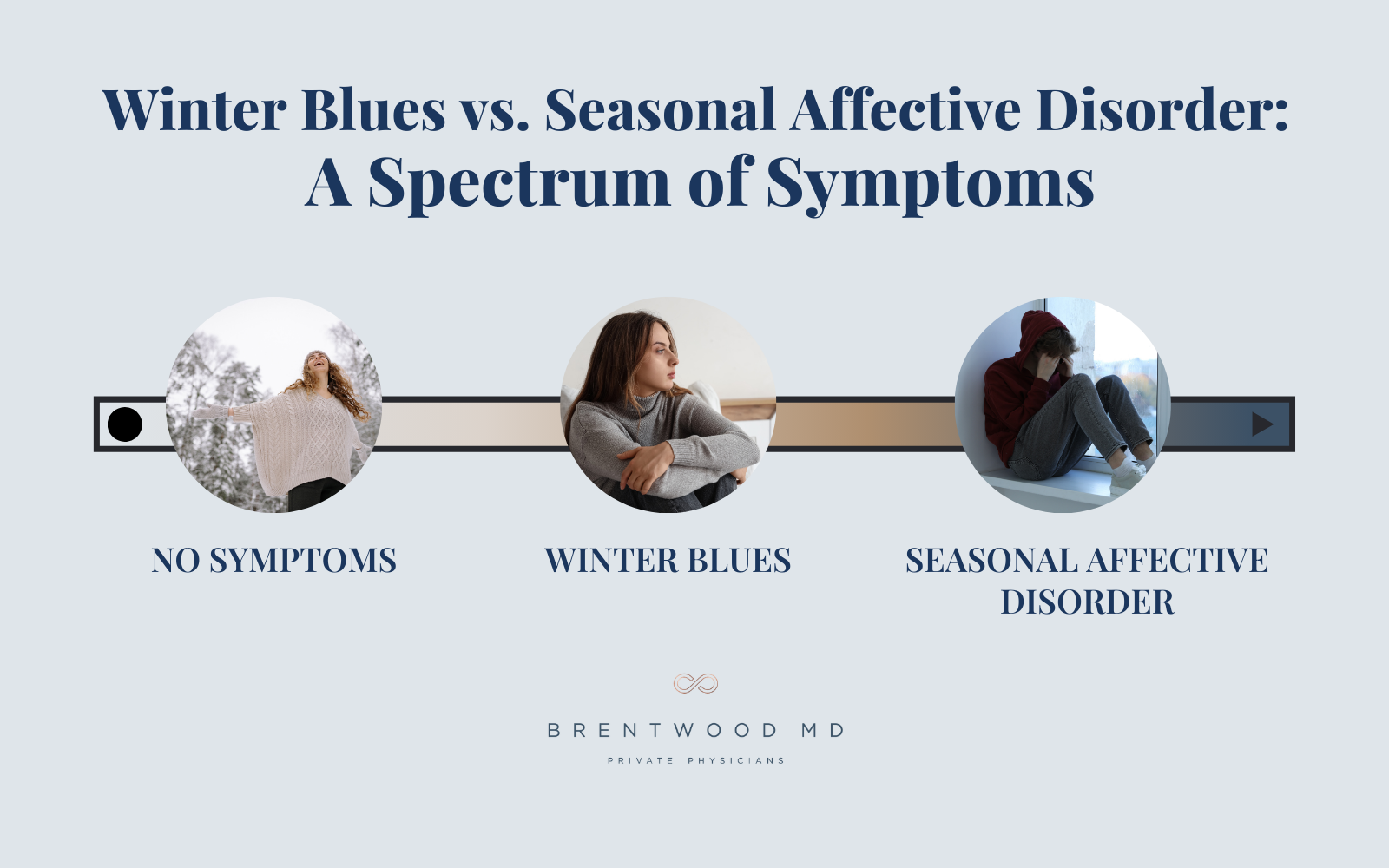
Winter Blues vs. Seasonal Affective Disorder: A Spectrum of Symptoms
What if you don’t meet the full clinical criteria for seasonal affective disorder, but you still struggle in the winter? That’s worth considering and shouldn’t be dismissed.
Winter blues is a separate, milder condition than seasonal affective disorder, and it affects up to 20% of people. Symptoms are less severe but very real: temporary sadness, lower energy, mild loss of interest, and a tendency to want to stay home more. The key difference is that people with the winter blues can still function at work, maintain relationships, and enjoy life. They just feel less like themselves.
My view is that whether you meet full diagnostic criteria or not, if you’re noticing these patterns each winter, you can still benefit from doing something about it. Winter blues and seasonal affective disorder fall on different sections of the same disease spectrum, and many of the treatments that work for one tend to help the other, too.
What Causes Seasonal Affective Disorder?
Reduced daylight in winter disrupts the body’s circadian rhythm, leading to delayed melatonin secretion and a misalignment of your internal clock. Altered serotonin function has also been observed during winter months. The combination of circadian misalignment, neurotransmitter shifts, and individual genetic susceptibility appears to drive the symptoms of seasonal affective disorder.
Risk factors include a family history of depression, a personal history of depression, shift work, and an indoor lifestyle with limited daylight exposure.
Evidence-Based Treatments for Seasonal Affective Disorder
The fantastic news is that many effective, evidence-based treatments are available for seasonal affective disorder.
Bright Light Therapy
Bright light therapy is the cornerstone of treatment for seasonal affective disorder, and the evidence is strong. Used correctly, it produces response rates comparable to antidepressant medications.
The setup matters. You need a 10,000 lux light box that’s UV-filtered. Note that this isn’t a regular lamp, and it isn’t a tanning bed. Position your light box 16 to 24 inches from your face, keeping your eyes open but avoiding staring directly into the bulbs. You can read or work while you use it for 20 to 30 minutes each morning during symptomatic months.
Most people notice improvement within one to two weeks, though full effects can take up to four weeks. You’ll find many light box options on the market at a wide range of price points. You don’t need to buy the Rolls-Royce version. Just ensure the device is rated at 10,000 lux with UV filtering, is from a reputable company with good reviews, and that you use it consistently and correctly.
Cognitive Behavioral Therapy (CBT)
CBT with a well-trained therapist produces results comparable to bright light therapy and may actually offer better durability across subsequent winters. Sessions often focus on identifying negative thought patterns around winter and darkness, building coping strategies for low energy and limited light, and establishing structured behavioral habits. Patients can even combine CBT with light therapy and other measures to augment effectiveness.
Lifestyle Measures
Don’t underestimate lifestyle changes in managing seasonal affective disorder:
- Maximize outdoor daylight, especially in the morning. It’s one of the most accessible and important tools available. Aim for 30 minutes of outdoor sunlight daily when possible. Open the blinds at home, and sit near windows when you can’t get outside.
- Regular exercise appears protective against winter mood decline.
- Follow a structured sleep-wake schedule.
- Maintain social connections with friends, family, or faith communities to counteract the isolation and hibernation instinct that winter tends to produce.
- Check vitamin D levels and supplement when needed. Low vitamin D is common in winter and has been associated with depression in observational studies.
Medication
At times, certain antidepressants may be a reasonable next step for treating seasonal affective disorder. Fluoxetine, sertraline, and bupropion all have solid evidence for seasonal depression.
Bupropion is uniquely notable; it’s the only medication with FDA approval specifically for preventing SAD. It works by blocking the reuptake of norepinephrine and dopamine, targeting the low-energy phenotype common in winter depression, and showing lower rates of weight gain and sexual dysfunction compared to other antidepressants.
Two important cautions regarding medications, however:
- Bupropion is not appropriate for patients with a history of seizures.
- You should be carefully screened for bipolar disorder before starting any antidepressant medication, and a physician should monitor you for signs of hypomania or mania as treatment progresses.
Playing Offense: Preventing Symptoms Before They Start
For patients with predictable seasonal depression, prevention can be a powerful strategy. Starting interventions in late summer or early fall, before symptoms arrive, dramatically blunts or even prevents the annual crash for many.
Pre-season bright light therapy, beginning CBT before symptom onset, and, in appropriate cases, starting bupropion prophylactically from early fall through early spring are all part of a proactive plan. Lifestyle strategies like exercise and keeping a structured plan, even when motivation drops, also have a genuinely neuroprotective effect.
How We Approach Seasonal Affective Disorder at Brentwood MD
At Brentwood MD, we’re proud to truly know our members and take the time for in-depth evaluations.
If a member comes in with potential symptoms of seasonal affective disorder, we start with a comprehensive, multi-year review of their history, order lab work if needed, and take a look at their sleep, nutrition, exercise, and any medications they’re taking. Then, we can build a personalized care plan around your unique, specific picture.
That plan might include access to a medical-grade light box with proper usage guidance, medication discussions including prevention options, referrals to CBT-trained therapists, or a structured lifestyle plan for light, movement, sleep, and social connection. No two plans look exactly the same, because no two patients do either.
Don’t Wait: Seasonal Affective Disorder Is Treatable
Seasonal affective disorder is not a character flaw. It’s a biologically grounded condition with real, evidence-based solutions. Even if you don’t meet the full clinical criteria for a SAD diagnosis, if winter noticeably affects your mood, energy, relationships, or performance, that’s worth addressing.
If you suspect SAD or the winter blues might be impacting you, I suggest tracking your symptoms and bringing that information to your appointments. Don’t ignore the pattern or wait for spring to bail you out. If it’s affecting your life, talk to a clinician who understands it and can screen you properly.
And if you’re already in the thick of this winter’s symptoms, know that there’s plenty we can do right now to provide relief. And we can set you up to face next fall in a much stronger position.

Dr. William Pierce is a board-certified Family Medicine physician with experience in Emergency Medicine who joined Brentwood MD in 2025. He specializes in providing comprehensive, personalized care that combines preventive health strategies with acute medical expertise. Dr. Pierce is committed to building enduring patient relationships grounded in trust, clinical excellence, and collaborative health management.