Download file | Play in new window | |
Food is the most constant variable in your health. You make decisions about it multiple times a day, every day, for your entire life.
And yet, for so many of us, those decisions are more often influenced by the noise of trending diets, friends’ recommendations, and social media posts than by a clear understanding of what our bodies actually need.
This is exactly the space in which Dr. Tiffany Watson works.
Known widely as Dr. Tiff, she holds a PhD in health and human performance and is a certified strength and conditioning specialist, fitness nutrition specialist, and intuitive eating counselor. She serves as nutrition director at MPOWER Physical Therapy in Nashville, Tennessee, and works with clients both in person and virtually across the country.
Dr. Tiff’s background bridges sports psychology and applied nutrition, a combination that gives her a uniquely complete view of what it takes to change how people perform and feel. She recently joined me on our Future of Medicine podcast to talk about performance nutrition: what it is, how it works, and what most people get wrong.
At Brentwood MD, we consider nutrition a core part of a member’s overall health plan. This conversation with Dr. Tiff reinforces exactly why that matters and offers a framework that anyone, regardless of their starting point, can begin applying.
Fuel, Sweat, and Science: The High-Performance Formula
Dr. Tiff describes her work through a three-part formula she calls Fuel, Sweat, and Science. It sounds simple, but each element carries more meaning than the label suggests.
Fuel isn’t just the food on your plate; it’s everything coming in. As she puts it, “Your fuel is what you consume, the energy on the base level, the calories that you consume, but also the information, the community, the music, the news you’re watching. All the energy that’s coming in is the fuel.”
Sweat, in turn, represents the energy going out. It includes physical movement, yes, but also the discomfort you lean into, the stress that creates adaptation.
All of it, whether fuel or sweat, needs to be rooted in science. And by “science,” Dr. Tiff means real, longitudinal research, not the kind of one-off study that gets turned into a trending takeaway.
This framework is useful because it remains consistent across the board, despite performance looking different for everyone. If you’re an athlete, then your performance is your physical output on the field. But if you’re an entrepreneur, it’s your mental output. If you’re a parent, it’s your energy and presence with your children.
The stage changes, but the formula applies regardless.
A Process Built Around You, Not a Formula
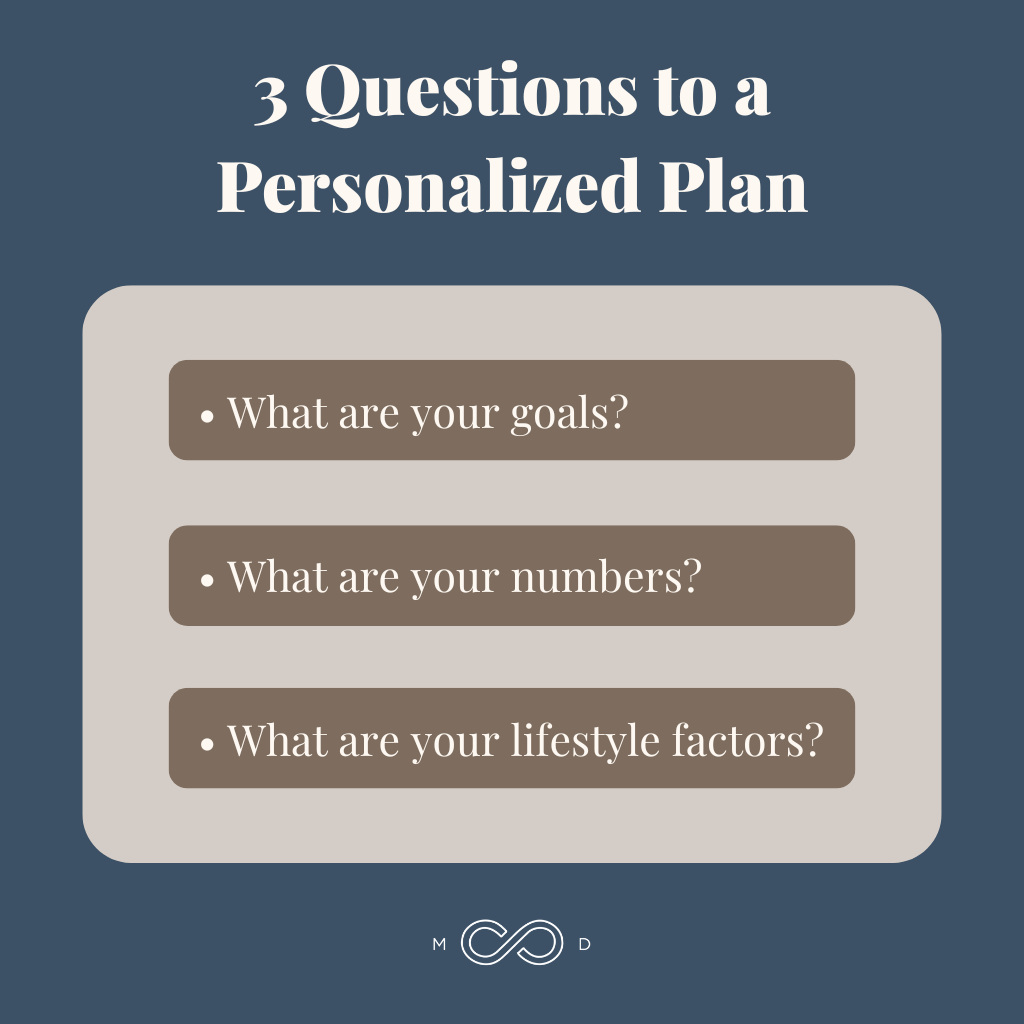
When Dr. Tiff begins working with a new client, she doesn’t start with a meal plan. She starts with questions. What are your goals? Improved body composition, better sleep, managing a health marker like cholesterol or blood sugar, feeling better overall?
Then, in addition to looking at labs, Dr. Tiff conducts a body composition assessment on every client to establish a baseline, including muscle mass, body fat percentage, hydration levels, visceral fat, and basal metabolic rate. Combined with a review of what someone is currently eating and their relevant lab work, this gives her a clear picture of where a person is starting before she plans anything.
The final component of the discovery process is getting a genuine picture of this person’s lifestyle. What does their schedule actually look like? What can’t they change? What are they willing to sacrifice, and what’s non-negotiable?
The goal here isn’t just to gather data. It’s to design a nutrition plan that will actually last.
If Dr. Tiff tries to put someone on an unrealistic training schedule or ultra-restrictive diet that clashes with their job, they won’t be able to stick with it, regardless of how much they want to achieve their goal.
“There’s always an ideal,” she says, “but if that’s not something somebody can handle right now, whether [it’s] the season they’re in, or because of priorities, or because of commitments, then it’s setting them up for failure.”
Whatever a person’s goal, Dr. Tiff strongly believes in making the process to get there realistic and sustainable.
Learning Macros, Developing Intuition
To that end, Dr. Tiff begins every nutrition plan with education regarding macros.
Carbohydrates, fats, and proteins are the three macronutrients (macros) that make up virtually every food source. Dr. Tiff believes everyone needs to spend time understanding them at the start of their nutrition journey, not to obsess but to learn. “You can’t be intuitive until you understand what your body needs,” she says. “The beginning of that journey has to look like macros, I believe.”
As a general starting point, she finds that about 80% of her clients do well on a 40/30/30 breakdown: 40% carbs, 30% fat, 30% protein. That ratio gets adjusted based on goals, health history, activity level, and even food preferences.
Someone who gravitates toward red meat, salmon, and avocados might do better with a higher fat, lower carb profile. Someone doing endurance work and reaching for fruits and grains will likely need more carbohydrates. The point is that macros provide a foundation flexible enough to plug into almost any approach once you understand the principles behind them.
Midlife, Hormones, and the Case for Early Muscle Building
One important element of our conversation covered what happens to the body during perimenopause and andropause, which are the hormonal transitions humans encounter in their 40s and 50s. The changes are real, and they affect body composition in ways that catch a lot of people off guard.
Both men and women experience a decline in sex hormones, particularly estrogen and testosterone, during these phases of life. “Those two hormones drive lean mass,” she says. “How we build lean mass, how we maintain lean mass, and then how we store body fat.”
As these hormones drop, muscle mass slowly decreases, often without anyone noticing at first. Because muscle drives metabolism, a lower metabolism follows. Weight begins to build and becomes harder to lose. Women, especially, find themselves eating less and less just to maintain the same weight, a frustrating cycle that feels like their body is working against them.
Elevated cortisol compounds the problem. During perimenopause and menopause, the body doesn’t manage stress as well. High-intensity exercise, calorie restriction, alcohol, and emotional stress all spike cortisol, which then disrupts sleep and recovery. Women often end up overexercising, undereating, and feeling worse than when they started.
The message here isn’t meant to be discouraging. You can absolutely build muscle and improve body composition in your 40s, 50s, and beyond. Dr. Tiff is clear about that. It just requires a different strategy than before.
But one takeaway for anyone in their 20s and 30s is that this is the ideal time to establish a strong foundation of lean tissue, at a time when your hormones are optimized and recovery is easier.
“If we would help teach our younger generations to set themselves up for success and have that nice layer of lean tissue going into perimenopause and andropause,” Dr. Tiff says, “I believe it would offset some of the decline.”
It’s always easier to maintain something than to rebuild it. That’s a message worth sharing to save people a lot of headache down the road.
Building Muscle and Losing Fat
One point Dr. Tiff stresses is the difference between getting stronger and actually building new muscle. They aren’t the same.
“You can get stronger, doing higher weight, more reps, more volume. Absolutely, you’re going to see progress,” she says. “But if you’re talking about truly building new muscle to build metabolism and have more resilience, you might have to gain some weight.”
Building new muscle requires a calorie surplus. Think of your cells like seeds: you have to feed them energy for them to grow. Protein is the priority, especially for recovery and muscle protein synthesis. But protein isn’t primarily an energy source.
“It’s the carbs and the fat that fuel the training,” Dr. Tiff explains. “So you need just excess energy. That could come from carbs, could come from fat, but certainly you want to make sure you get your minimum protein needs met.” The current cultural fixation on protein alone, without accounting for the full macro picture, misses this.
For those whose goal is losing body fat, the process starts with a calorie deficit. But Dr. Tiff’s approach is more nuanced than just cutting calories.
She begins by asking what someone is already doing for fitness. If they have a solid routine, she doesn’t change it; she adjusts the nutrition to match the energy they’re expending. If they’re not moving at all, she starts with nutrition first and introduces movement gradually. “If they’re not moving at all, I certainly nudge them to try to start moving,” she says. “But I tend to start with the nutrition piece first, get that foundation built, and then as they feel ready, if nothing else, just start walking.” Then, as they build movement over time, that reinforces nutritional changes as well.
One tricky situation is when a person wants to both build muscle and lose fat at the same time. According to Dr. Tiff, the right approach depends on where they’re starting.
For this reason, she starts by looking at body composition. If muscle mass is low, she generally pushes to build that first, because more lean mass makes fat loss easier over time. If body fat is already high, she tends to encourage getting leaner before attempting a muscle-building phase since it’s difficult to avoid gaining some fat while building new muscle. However, true beginners to strength training can sometimes accomplish both simultaneously since they’ll have an initial adaptation period.
Dr. Tiff reiterates the importance of a science-backed, strategic approach to true body transformation. While good habits are an excellent place to start, and she in no way wants to undermine that, she also recognizes that small changes aren’t sufficient if you’re trying to meaningfully change the composition of your body. “That’s a science problem,” she says. “It’s not just basic habits.”
The One Rule She Applies to Everyone
Dr. Tiff’s non-negotiable that she applies to every person she sees isn’t a food recommendation or exercise routine. It’s a principle. “The only thing I never want someone to do is start a habit they can’t stick with,” she says.
That means if a client travels constantly, wines and dines clients, and attends fundraising events, telling them to cut alcohol isn’t a useful instruction; it’s a setup for failure. Of course, Dr. Tiff always educates people on the downsides of various foods and behaviors, such as how alcohol slows progress, disrupts sleep, and complicates recovery. But that doesn’t mean banning alcohol constitutes a realistic plan.
Instead, she asks a simple question. When a client says they’re going to cut desserts, cut gluten, or eliminate alcohol, she asks: “Is that something you want to do forever? Are you really committed to this being part of your new lifestyle?”
Most of the time, the honest answer is no. They can do it for 12 weeks, but not forever. Her response is to figure out how to moderate the offending item instead.
The one exception here is when lab work or a physician’s recommendation indicates a genuine health risk and something needs to be temporarily eliminated to mitigate that danger. But that’s the exception, not the rule.
Setting Up for Success: Environmental Changes
Environment plays a practical role in Dr. Tiff’s sustainability focus, too. For many people, that simply means removing triggers from the home.
If you’re unable to moderate Ben and Jerry’s, don’t keep it in the freezer. If alcohol is easier to skip when it’s not in the house, don’t stock it. “Those little tweaks can often make a big difference,” Dr. Tiff says.
That said, Dr. Tiff also warns about overrestriction. Total elimination, she says, tends to backfire. When we never allow ourselves any treats at home or during a holiday or at a friend’s house, overindulgence follows. The goal is conscious, deliberate enjoyment, not guilt, denial, and rules that are unsustainable.
Performance Nutrition: Final Thoughts
When we talk about nutrition at Brentwood, we mean exactly what Dr. Tiff talks about: fueling your body for the specific demands you face, informed by science, and built around consistency.
Dr. Tiff brings a rare combination of scientific rigor and genuine pragmatism to performance nutrition. She understands that the ideal and the sustainable aren’t always the same thing, and she’s built her entire practice around closing that gap for real people in their real lives.
Whether you’re navigating midlife hormonal shifts, trying to build lean mass, working toward fat loss, or simply trying to understand what you’re actually eating and why, her framework offers a starting point that’s grounded, actionable, and built to last.
At Brentwood MD, we work with members on exactly these kinds of questions, bringing together primary care, lab work, hormonal assessment, and personalized guidance to inform a comprehensive health strategy. Nutrition is central to that process.
If you’re ready to take a more intentional approach to how you fuel your body, we’d love to be part of that conversation.

Dr. Wright joined Brentwood MD in 2022 as the model allows him to spend more time connecting with patients and build a foundation of exceptional care. He is a Nashville native and completed his family medicine residency at the University of Tennessee Health Science Center, where he also served as Chief Resident. He believes that your health deserves a prominent position on your priority list, and would be honored to serve you and your family.