Download file | Play in new window | |
Seven months in, and I keep catching myself thinking: how did we get so lucky?
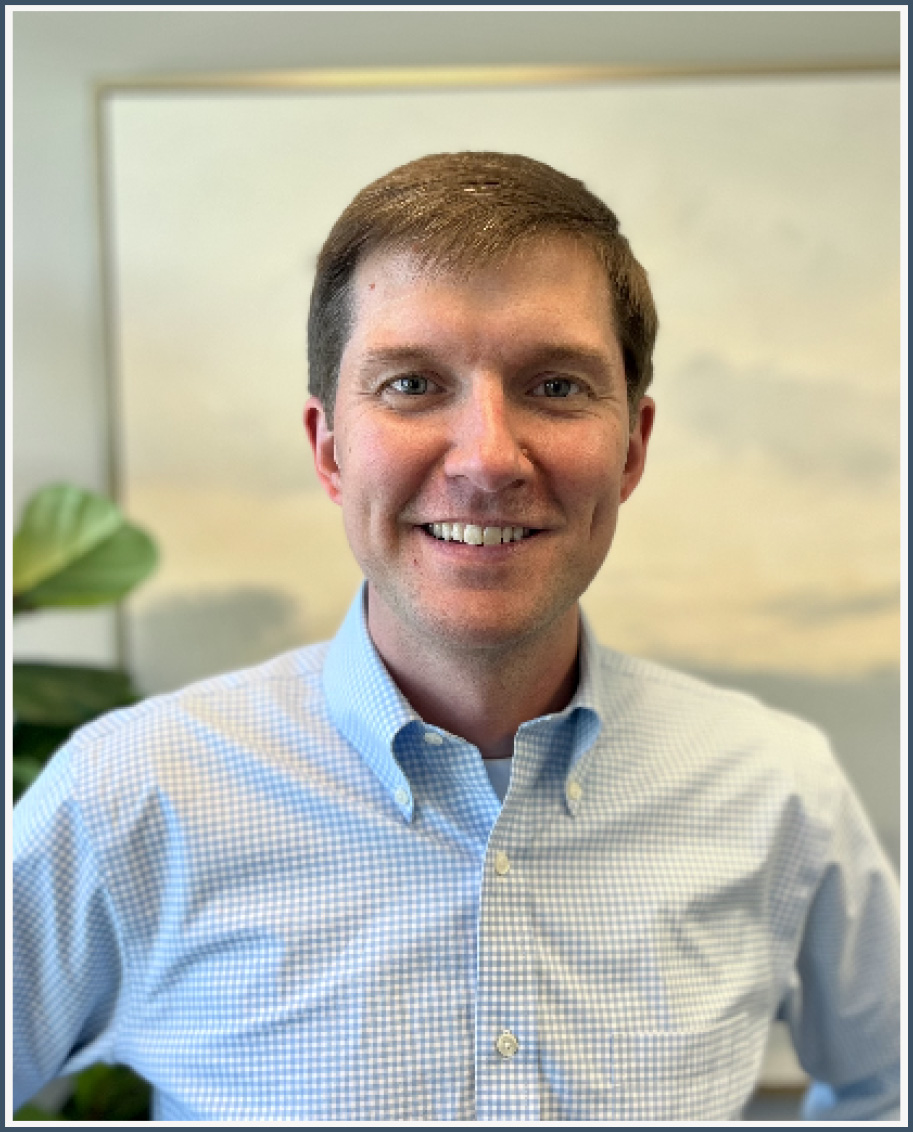
Dr. William Pierce joined our team at Brentwood MD not long ago, and while his current members know him well, I wanted to take the opportunity to introduce him more broadly here and on my podcast. Because the story of how William Pierce became a doctor, found his way to concierge medicine, and landed in our practice is one worth telling.
Why Medicine: The Origin Story
Dr. Pierce grew up in Jackson, Tennessee, in a physician household. His father was an OB-GYN, and watching him care for patients and earn the respect of his community planted an early seed.
But it wasn’t just the example his dad set. Dr. Pierce is, in his own words, a bit of a nerd about the human body. “You can be in this field for decades and continue to not know everything, which is something that excites me,” he told me.
Then there’s the relational piece, which, if you’ve spent any time with Dr. Pierce, you’ll immediately understand. For him, the apex asset in medicine is the relationships. His goal has always been to come alongside patients, dive into their goals, and let that drive the plan of care. And we see that in his work at Brentwood MD. His members, he says, become like extended family.
Dr. Pierce completed his family medicine training in Jackson, Tennessee, with one major divergence from the norm in his education. Fairly early in residency, he started picking up shifts in rural emergency rooms, a decision that proved pivotal in his training and future.
How the ER Changed Everything
When you’re in a standard residency track, your exposure is largely to chronic disease management. You see a patient with high blood pressure, you adjust the medication, you schedule a follow-up. It’s textbook care, carefully supervised, and largely predictable.
The emergency room in a rural setting is nothing like that. You’re often the only physician in the building, working with a couple of nurses, and whatever rolls in off the street is yours to handle. No playbook, no attending to defer to, and frequently no precedent in your training for what you’re seeing.
Dr. Pierce described a shift during his second month in the ER. A little girl came in, barely three years old, premature history, chronic oxygen dependence, heart and gut complications, and she had just been discharged from two weeks in the Vanderbilt ICU. She came in with septic shock and severe dehydration, needing immediate intervention to save her life. But IV access proved impossible with such depleted veins. Dr. Pierce’s only option was to drill an intraosseous line directly into her leg to push fluids and stabilize her enough to get her on a helicopter back to Vanderbilt.
“I don’t think there’s ever a time I’ve been as nervous as taking care of that kid,” he said.
By the time his training ended, Dr. Pierce had logged thousands more patient encounters than his classmates. He’d made thousands of urgent decisions under real pressure. When he finished his training and prepared to walk into “the real world” of unsupervised practice, there was no dread, no nervousness, no feeling of unreadiness. After that little girl and others like her, most medical care seemed almost easy.
But the ER also gave him something else. Frequently seeing the acute flare of end-stage disease, with the convergence of poverty, poor habits, and years without preventive care, left him asking a question I once asked myself: How do we keep people from ending up here in the first place?
Concierge Care: The Medical Model Schools Don’t Teach
As Dr. Pierce was finishing his training and considering his options, he was thinking through the paths most residents consider: hospitalist work, outpatient clinic, ER fellowships, sports medicine, addiction medicine. He had some interest in the hospitalist model, but the tradeoffs gave him pause. Sure, you only work about half the year, but that means half your weekends and half your holidays are taken. For a family man with two young kids, that math didn’t work.
The outpatient path wasn’t much more appealing. “It’s a numbers game,” he said. “It’s disease management, algorithmic care, checklists, to where you’re seeing somebody every five to ten minutes, and then it’s next! You don’t have the time to build genuine connections, to take someone’s values and goals and have that drive the plan of care. That doesn’t exist.”
I’ve said almost the same thing about my own residency experience. I could count on one hand the patients I felt I’d genuinely helped. Everyone else, despite my best efforts, just kept getting sicker, even though I followed the prescribed protocols for care. It was incredibly discouraging, but I didn’t know any alternative existed until a patient told me about concierge medicine.
Dr. Pierce was in the same boat until a mentor in his program introduced him to the concierge model of medicine, and specifically to Brentwood MD. He started working through the content we’d created, exploring the podcast episodes, the blog posts, the philosophy behind what we do. And it clicked: “This is what I want to do.”
“I describe myself as being pickled,” he told me. “Once you experience this kind of medicine, you can’t go back to being a cucumber.”
He was so pickled, in fact, that he decided he wanted to come work with us. His attitude was to hope that Brentwood MD would give him an opportunity. But if not, he couldn’t turn back to the conventional model. He’d just have to find some part-time ER work while trying to build something like Brentwood on his own.
As things turned out, we were delighted to meet Dr. Pierce and bring him on board. From our perspective, we were the lucky ones.
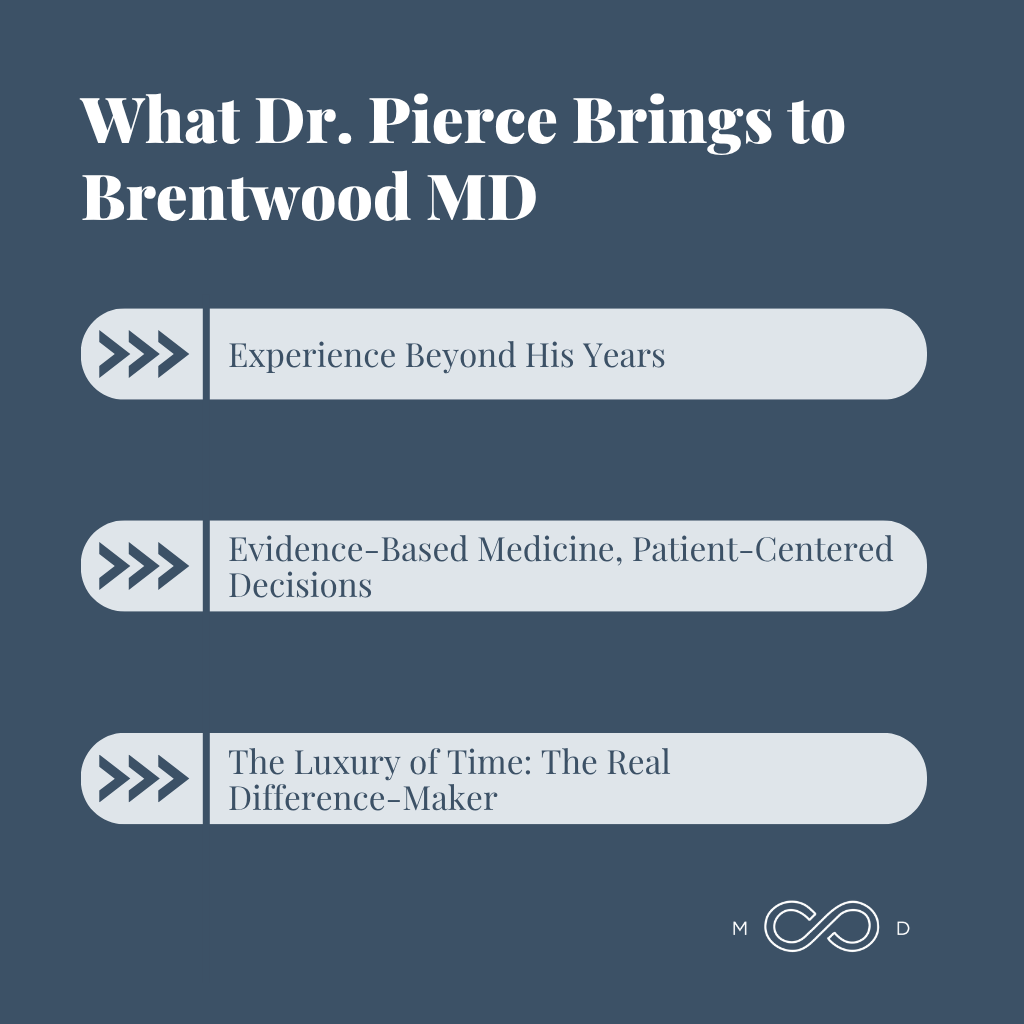
What Dr. Pierce Brings to Brentwood MD
Experience Beyond His Years
When Dr. Pierce first arrived, one of his honest concerns was whether members would trust a younger physician to be their health asset manager, the quarterback of their care. That concern dissolved quickly. His ER background gave Dr. Pierce a breadth of clinical judgment that most physicians take years to develop. He can triage effectively, distinguishing what needs immediate attention from what can be thoughtfully addressed at home or in-office.
There’s also an advantage to having all of that medical school knowledge fresh and readily accessible. Dr. Pierce passed his boards recently, with up-to-date medical thinking and science at his fingertips. But beyond that, he brings a genuine curiosity and enthusiasm for learning that’s both hard to match and incredibly valuable.
Evidence-Based Medicine, Patient-Centered Decisions
One of the things that’s surprised Dr. Pierce most since joining Brentwood is the opportunity to use evidence-based medicine through an entirely different lens. In traditional care, everything is beholden to a system of algorithms, checklists, and standardized protocols.
In the concierge model, decisions are made strictly between doctor and patient. Dr. Pierce said he appreciates how that broadens the scope of potential treatments we can offer our members. Some want to avoid medication entirely and focus on lifestyle. Others want the most current diagnostics and a deep dive into emerging therapies. Others are curious about supplements or more investigational options, and they want an honest read on the evidence.
“We can evaluate all of that,” Will explained, “and they’re getting to drive the ship. I’m here as a health asset manager. What’s the upside? What’s the risk? We’re taking their unique goals and values, and that is the lens that drives care forward, while still considering evidence-based practices.”
That’s not one-size-fits-all medicine. That’s real healthcare.
The Luxury of Time: The Real Difference-Maker
Dr. Pierce has an apt saying about what this model of care actually feels like. “It’s still medicine,” he said, “just a different rhythm.” The difference between a ten-minute appointment and a two-hour one isn’t merely logistical. It changes everything about the quality of care.
When you have time, you’re not just running down a list of lab values and reporting “normal, normal, normal.” You’re asking what optimal looks like for this person. You’re spending an hour discussing the pillars of health, which Dr. Pierce considers to be nutrition, exercise, sleep, stress management, and emotional and spiritual health. These pillars form the long-term, underlying foundation for most of those lab numbers you’re used to hearing about in appointments.
To some conventional physicians, our schedules may look strangely empty. But that’s just because we don’t have every moment of the day booked with back-to-back, super-short appointments. We build in white space to really consider each member’s care, to think through their case, research whatever is necessary, and follow up consistently. And of course we allot adequate time for every appointment.
I sometimes use the analogy of energy units. On any given day, let’s say I have 100 units of energy to deploy toward patient care. In the concierge model, those units go to say five people per day. Each person receives a full 20 units of my energy toward deep, thoughtful, and unhurried care. In a traditional setting, those same units get spread across 35 patients. That’s less than three units per person.
This may be an abstract example, but you can see the application pretty clearly.
We’re Just Getting Started
After just seven months at Brentwood, Dr. Pierce’s patient panel is already half full, which far surpassed anything either of us expected in such a short timeframe. People meet him, and they refer their friends and family. That’s not a coincidence. And Dr. Pierce couldn’t be happier.
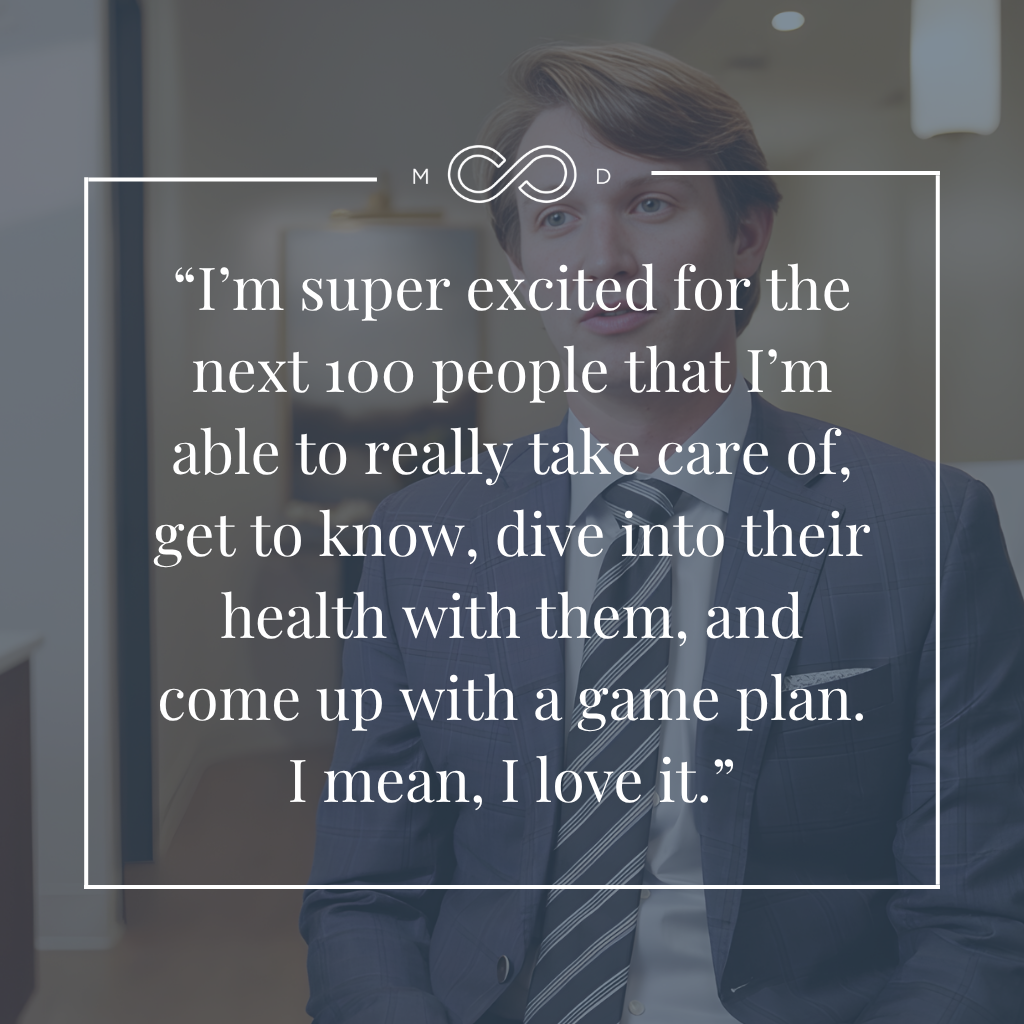
“I’m super excited for the next 100 people that I’m able to really take care of, get to know, dive into their health with them, and come up with a game plan,” he told me. “I mean, I love it.”
If you ever have the chance to meet Dr. Pierce, take it. You’ll see the magic of his heart, his mind, and his ability to connect with people. He is fully committed to this model of care, to figuring out a path to help each person become the healthiest, most vibrant, strongest version of themselves, through advocacy and a safe place to ask questions, be vulnerable, and be curious.
We don’t take that for granted. We’re lucky to have Dr. Pierce joining the Brentwood MD family. And we can’t wait to see the difference he makes in our members’ lives.
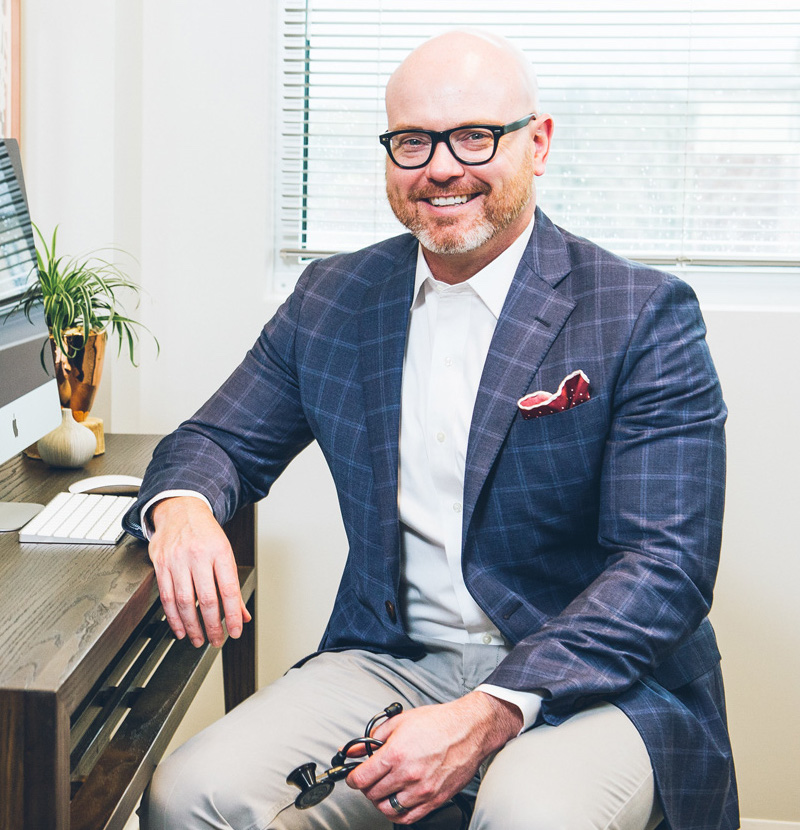
Dr. Aaron Wenzel is a concierge physician specializing in the care of fast-moving entrepreneurs, executives, and public figures in the Nashville, TN area. Dr. Wenzel’s diverse life experience and extensive training in family medicine, emergency care, nutrition, and hormone replacement therapies give him the unique platform to provide unmatched care for his patients.